

Free throws. Piano scales. The same 20 spelling words, again.
Every kid hits the boring part. Usually right around the moment they ask, "Why do I even have to do this?"
It's a fair question. And it turns out the answer matters.
Psychologists David Yeager (University of Texas at Austin), Angela Duckworth (University of Pennsylvania) and their colleagues studied more than 2,000 teens and young adults. Students who connected their schoolwork to helping other people someday stuck with a boring task longer. Goals that were only about themselves, like landing a fun career, didn't reliably have the same effect.
This week, it shows up somewhere pretty unglamorous: the boring part.
HERO STORY
The Forest Man of India
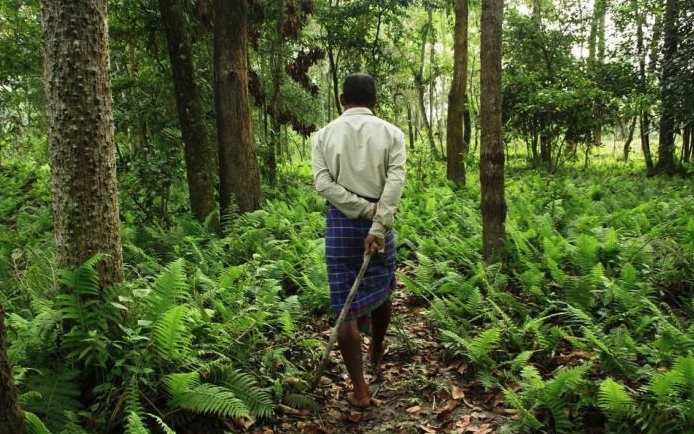
Jadav Payeng inside Molai Forest — Prepare for Change (2016) - Shailendra Yashwant
Have you ever planted a seed and waited for it to grow? It takes a long time, doesn't it?
In 1979, a young man named Jadav Payeng lived near a giant river in India called the Brahmaputra.
That year, huge floods washed lots of snakes onto a sandy island in the river. When the water went away, there were no trees to give them shade. The sun was too hot, and the snakes died.
Jadav was heartbroken. "The snakes died in the heat, without any tree cover," he said later.
He asked the forest experts if trees could grow there. They told him nothing would. Maybe try bamboo.
So he did. He planted about 20 little bamboo plants.
Then he kept going. One tree at a time, year after year. Nobody was watching. Nobody was clapping.
"It was painful, but I did it," he said. "There was nobody to help me."
Almost 30 years later, in 2008, forest officials went looking for a big herd of elephants. They followed them onto the island and were amazed.
There was a forest. A real one, bigger than New York's Central Park, full of elephants, deer, rhinos, and even tigers.
Today people call Jadav the Forest Man of India.
Most days, planting one more tree was boring. He kept going because he knew who it was for.
Talk about it: What's something boring you do that might help someone else one day?
THE TINY TRY
Who’s It For?
What does your child say right before they give up on something boring?
"This is pointless." "I'll never use this." Maybe just a long sigh and a slump over the homework.
Why it helps In the same research, one short exercise helped high school students connect what they were learning to how it could help others someday. Their math and science grades went up over the following months. A bigger why doesn't make the boring part fun. It makes it feel worth doing.
Want to give it a try? Before practice or homework this week, you might ask one question:
"Who could this help someday?"
For younger kids (5–9): Make it concrete. "When you learn to read really well, who could you read to?"
For older kids (10–17): Try it at practice, too. "Who on your team is counting on that free throw?"
Some days the answer will be "Nobody, Mom." That's okay. The question still plants a seed.
Before you go…
Happy Diwali to everyone celebrating today. The festival of lights is a lovely reminder that one small lamp can push back a lot of dark.
It's also National STEM Day, and Jadav's forest is a living science lesson: one bamboo shoot, plus a lot of patience, can grow into a whole ecosystem.
This short documentary follows Jadav through the forest he planted, elephants and all. It runs longer than our usual picks, so the first few minutes are a good place to start with kids.
Source: William Douglas McMaster, director (Best Documentary, Emerging Filmmaker Showcase, Cannes 2014)
Next Sunday, just in time for World Kindness Day: kids who built businesses around giving back, and what toddlers can teach us about why giving feels so good.
One seed at a time.
Your friends at REK,
Adam & Matthew Toren, Sylvia Tam, and Tammy Vallieres

Our new member hub is live — free activities, conversation starters, and resources for your family. Access it here.
“I will continue to plant until my last breath.”