
Why Noticing Changes Everything
Most of us don’t react to life — we run on autopilot.
Our brains are great at efficiency. They rely on habits, shortcuts, and familiar patterns to move us through the day.
It’s helpful… until we realize we’re repeating things we meant to outgrow, or responding in ways that don’t quite match who we want to be.
But here’s what's interesting: research consistently shows that when we actively notice what we’re thinking, feeling, or assuming, our behavior changes without force or willpower. Simply paying attention interrupts autopilot.
Ellen Langer (aka the mother of modern mindfulness) has spent over 40 years studying this exact skill. Her work shows that mindfulness isn’t about meditation or slowing down, it’s about noticing new things.
Long before the research, philosophers were pointing in the same direction.
Socrates believed wisdom began not with answers, but with awareness, especially the willingness to notice what we don’t yet understand.
Aware Mode isn’t about fixing yourself or trying harder. It’s about seeing what’s already there so the next step becomes clearer.
Here's a quick story that shows us what awareness looks like in real life.
The Courage to Notice What We Don’t Know
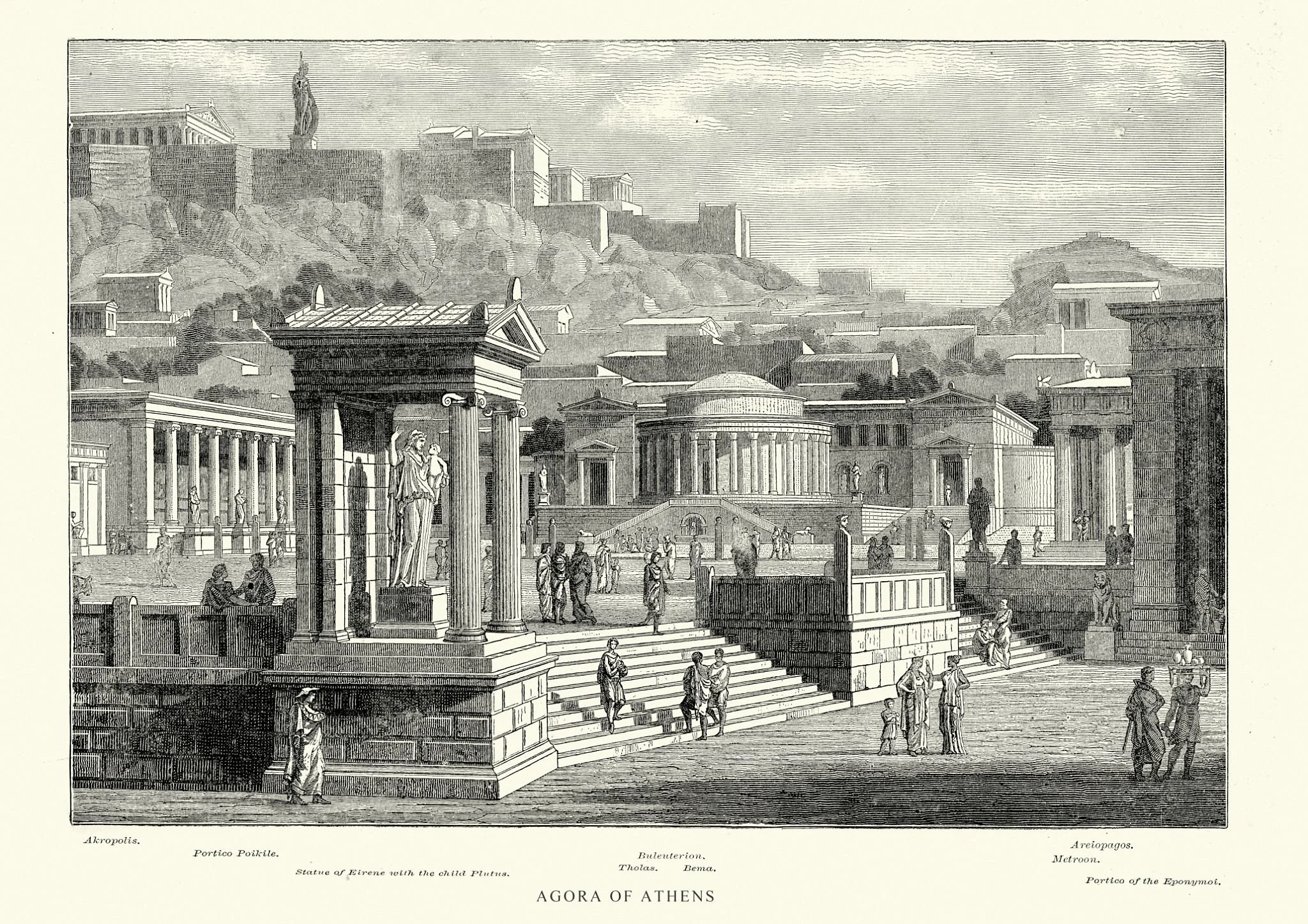
Image: Agora of Athens, 19th-century engraving · Public domain
About 2,400 years ago, in a city full of strong opinions and confident experts, Socrates was labeled the wisest man alive.
Socrates didn’t feel wise. In fact, he felt confused.
So he did something unexpected. He went looking for someone wiser than himself — politicians, poets, teachers, experts. Again and again, he found people who spoke with confidence, but couldn’t explain their thinking when gently questioned.
Slowly, a realization formed. Socrates wasn’t wiser because he had better answers.
He was wiser because he noticed the limits of his knowledge.
That awareness didn’t make him smaller. It made him curious. Open. Willing to learn.
Wisdom, Socrates discovered, doesn’t begin with certainty.
It begins with the quiet courage to notice what we don’t yet understand.
Being curious might be one of the smartest things we can practice.
And maybe that’s still the quiet skill worth practicing today —
especially with our kids, who are watching how we handle not knowing.
What might shift if we practiced noticing before explaining — with ourselves, and with our kids?
This historically grounded story is based on Socrates’ account of his life in ancient Athens, retold in modern language.
A Small Experiment for the Week
If there’s one small thing you could practice this week that would quietly make everything easier, it would be noticing.
Here’s a simple way to try it with your child or students.
At some point this week — a car ride, a walk, a transition, bedtime — you might say:
“Want to try a quick noticing game with me?”
Then pick one question and stay curious together.
For younger kids, it might sound like:
• “What’s one sound you hear right now?”
• “What’s something your body feels like today?”
For older kids or teens, you might try:
• “What’s one thought that kept popping up today?”
• “What’s something you noticed about yourself this week?”
You don’t need to respond with advice or turn it into a lesson.
Just listen. If it feels right, you can end with: “Thanks for noticing with me.”
You’ve just helped your child slow down, tune in and feel seen in a way that builds awareness without pressure.
Try it again later in the week, it will feel easier. This is a skill that grows by being returned to, not perfected.
Want to make this a shared challenge with another family or educator you know?
Feel free to pass this along or share it in whatever way feels natural.
Before you go…
A quick thank you to those of you who’ve been writing back to us. Your stories help shape what we share and remind us why this work matters.
If you ever feel moved to write, we read every note. And as a thank you, we’re gifting founding access membership to our community to those who share their story with us.
Today’s insight, the story, and this moment all point to the same quiet skill: noticing.
Noticing the small patterns that shape how we show up with our kids, our students, and ourselves.
If you’re curious to explore that idea a little further, try this first:
Before pressing play, look around and notice three things you’ve never really noticed before — a sound, a detail, a pattern.
Then watch Ellen Langer explain why that simple act matters more than we think.
👉 Start the noticing experiment →
Source: Interview with Ellen Langer, Earl E. Bakken Center for Spirituality & Healing (YouTube)
Wishing you a week where a little more awareness creates a little more ease.
Your friends at REK,
Adam & Matthew Toren, Sylvia Tam, and Tammy Vallieres

“Mindfulness is the simple act of actively noticing new things.”