
How Ownership Turns Kids Into Innovators
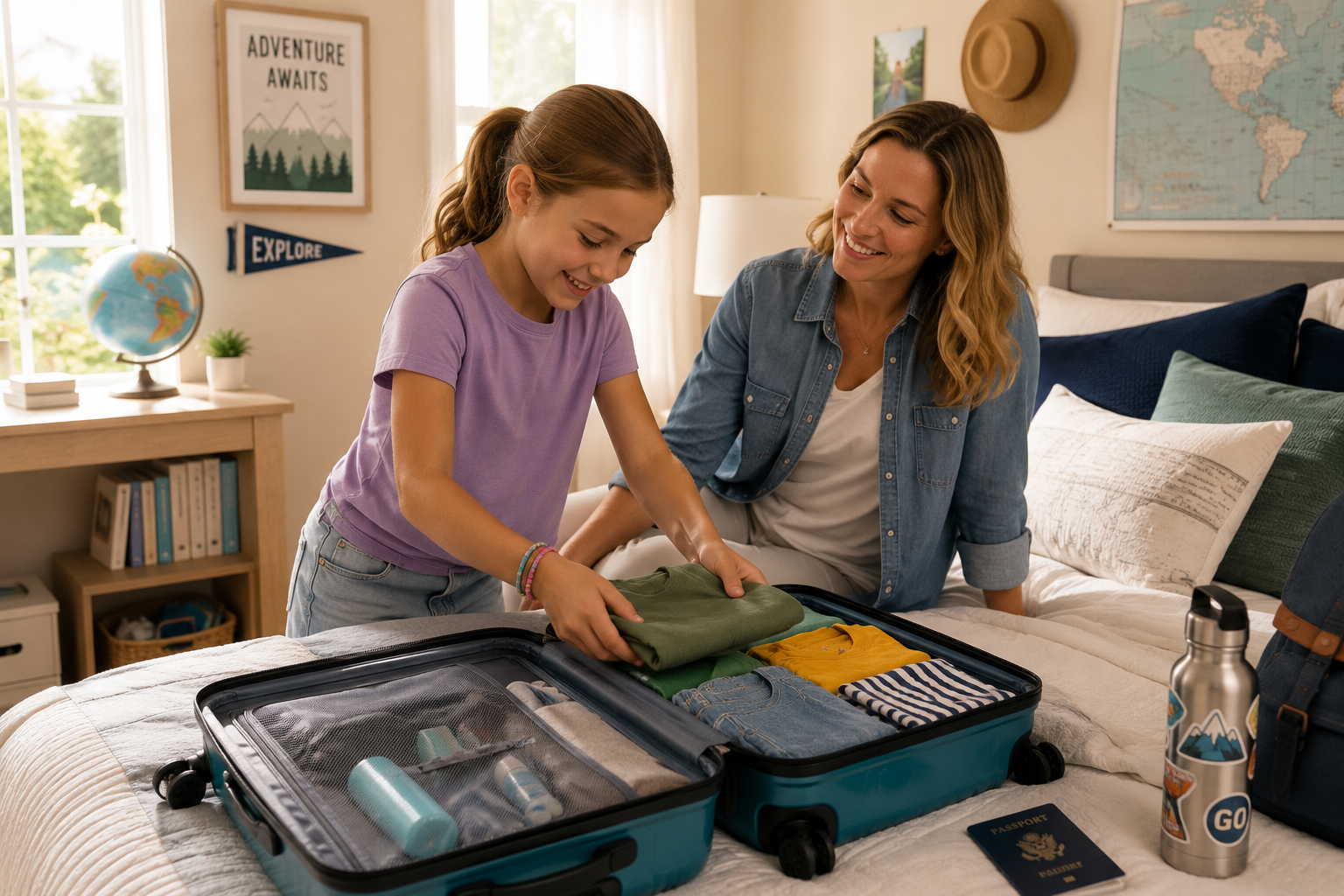
Did you know August is National Inventors Month?
A whole month dedicated to celebrating the people who looked at a problem and decided it was theirs to solve. We think that's a perfect way to frame what we're about to explore together.
This month is about Ownership Energy.
Not ownership of things. Ownership of outcomes.
Dr. Stephen Nowicki has spent decades at Emory University studying what separates kids who thrive from kids who drift. His research keeps pointing to the same thing: children who understand that their actions lead to specific outcomes — that what they do today shapes what happens tomorrow — grow up healthier, more resilient, and more capable of handling whatever life puts in front of them.
It's not about control. It's about connection. The connection between a choice and its consequence.
We start with a story about a boy who was told, at every turn, that the outcome was already decided for him. He disagreed.
STORY
No Sight, No Limits

When Srikanth Bolla was born in a small village in Andhra Pradesh, India, neighbors told his family to abandon him.
He was blind. His parents were farmers earning less than two dollars a day. The advice from people around them was practical, if brutal: what future could a blind child have here?
His parents kept him.
When Srikanth was old enough for school, local institutions refused to admit him. He found his way in. When he wanted to study science, the board told him blind students couldn't take science subjects. He took them to court. He won.
When he applied to universities abroad, he was accepted at MIT — becoming the first international blind student in the institution's history.
At every single step, someone told him the outcome was already decided. At every single step, he disagreed.
After graduating, he returned to India — not to take a safe job, but to build something. Bollant Industries now employs hundreds of differently-abled workers, manufactures eco-friendly packaging, and is valued at over $100 million. In 2025 he appeared as a guest shark on Shark Tank India.
He once said: "I lack eyesight, but not vision."
That's not a motivational poster line. That's a kid who understood, from the very beginning, that the story was his to write.
SKILL
Choice Mapping
When your child makes a decision this week, any decision, do they understand what that decision is actually connected to?
Dr. Nowicki's research shows that one of the most powerful things we can do for a child's development is help them see the chain: action leads to outcome leads to consequence they actually care about. Not as a threat. As a map.
This week, try Choice Mapping with one small moment.
When your child makes a choice, packing their bag the night before, finishing a task without being reminded, choosing to practice something, pause and walk through it together:
The choice: What did you decide to do?
The outcome: What happened because of that?
The reinforcement: What did that make possible for you?
Three questions. That's it. The goal isn't to lecture. It's to help your child see that the gap between where they are and where they want to be is made of choices, and those choices belong to them.
Srikanth Bolla figured that out early. The rest is history.
Where Ownership Meets Innovation
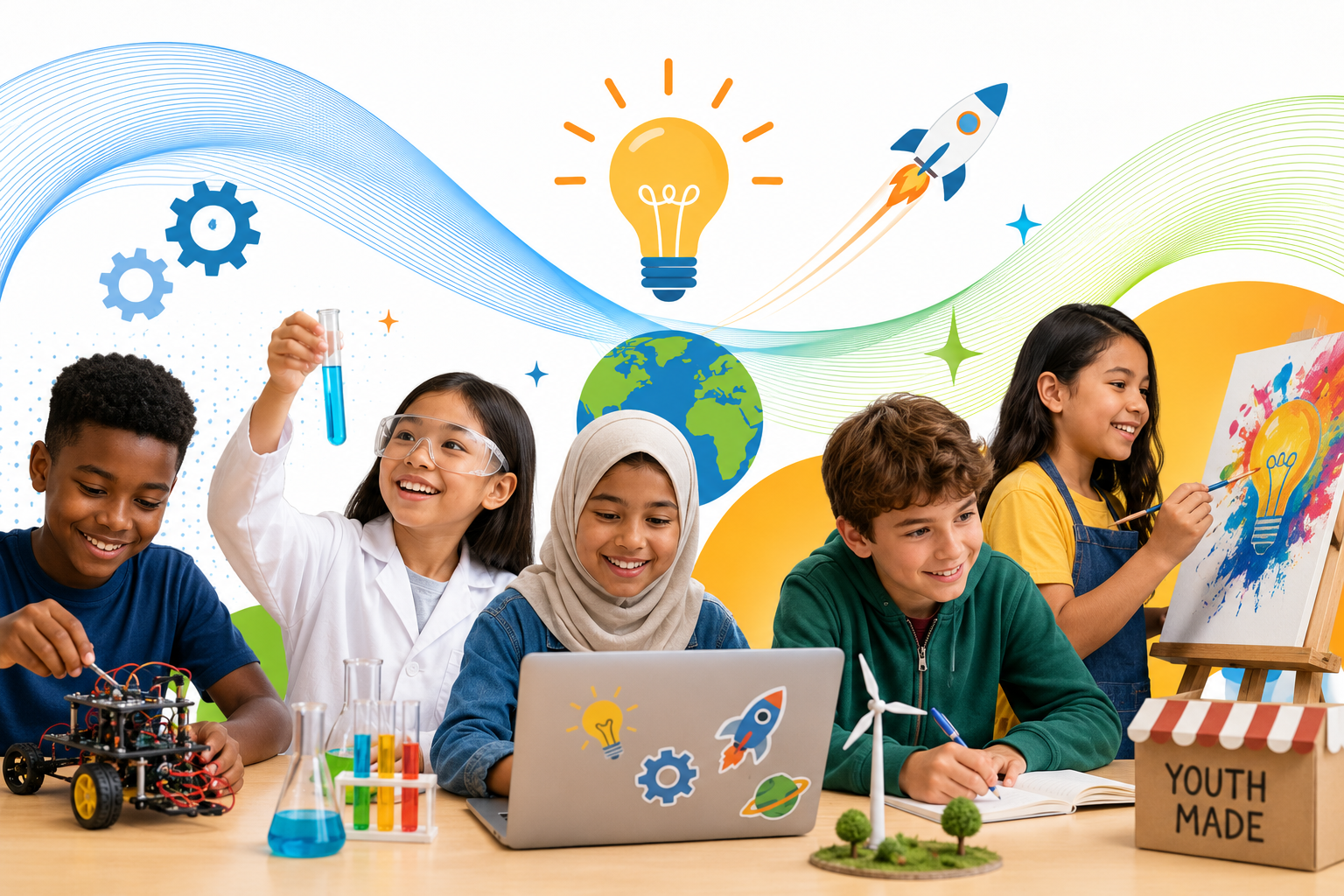
If your child loves creating, inventing, or dreaming up new ideas, Innovation World is a wonderful place to explore.
Their latest digital magazine celebrates inspiring young innovators from around the world while offering practical ideas to spark creativity at home and in the classroom. Beyond the magazine, Innovation World connects youth through innovation challenges, events, showcases, and opportunities to share their ideas with a global community.
Whether your child has already designed a product or is simply curious about solving real-world problems, their resources encourage the confidence, creativity, and connections that help the next generation of innovators thrive.
👉 See Young Innovators in Action
Before you go…
Today happens to be National Friendship Day and it got us thinking about the friendships we don't talk about enough — the ones that cross generations.
Younger friends, peers, older mentors. Each one adds something the others can't. The freshest perspectives often come from the furthest ends of the age spectrum.
This intergenerational friendship bench in Arizona shows what that looks like in its simplest, most beautiful form.
Source: ASU News — Arizona State University
We hope you start the new month by owning your week because every choice counts.
Your friends at REK,
Adam & Matthew Toren, Sylvia Tam, and Tammy Vallieres

Our new member hub is live — free activities, conversation starters, and resources for your family. Access it here.
“The most common form of despair is not being who you are.”