
How Tiny Brave Actions Stack Into Big Change
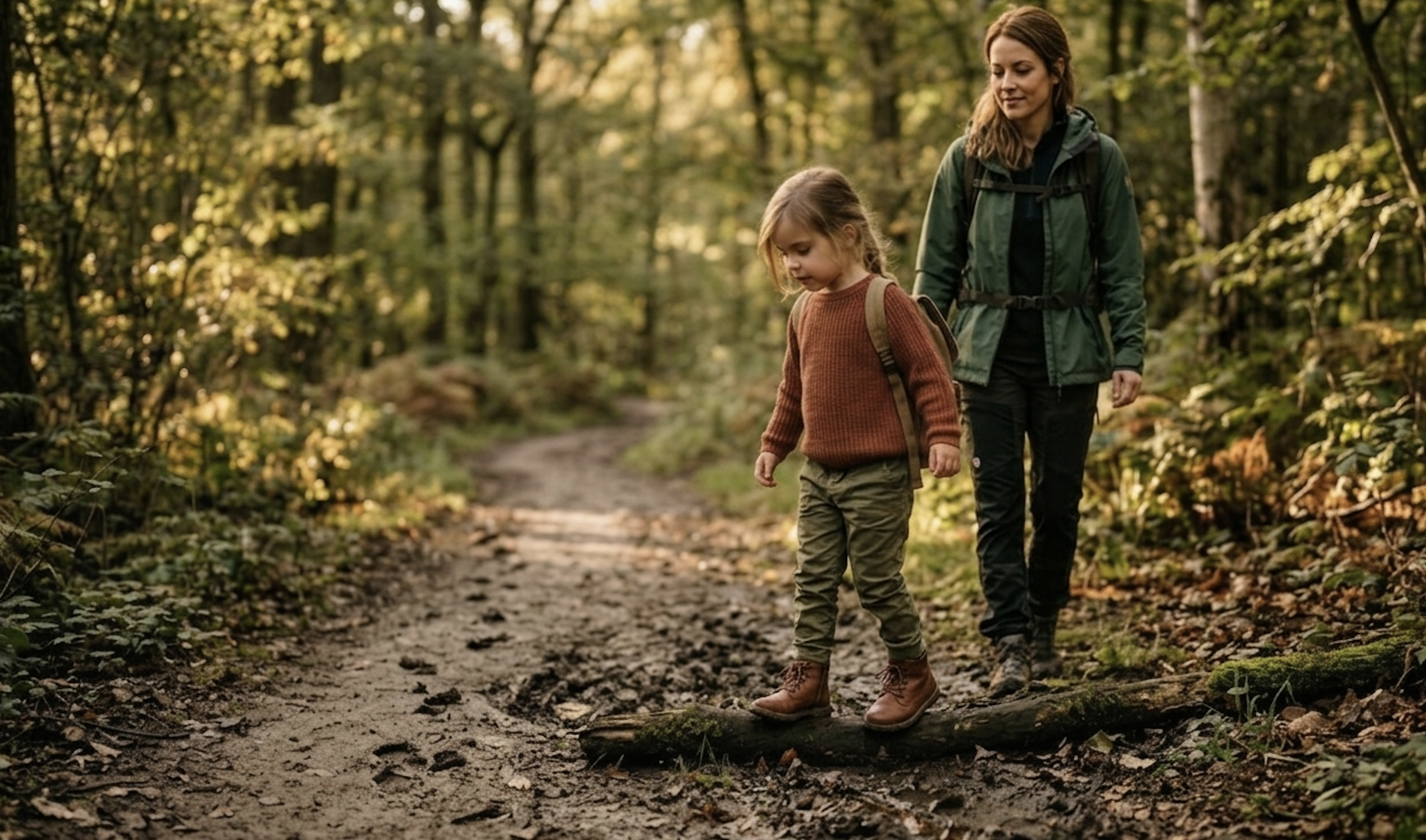
We've spent this whole month talking about courage.
We started with the formula — fear times willingness, and why being scared is actually a prerequisite for the real thing. Then we looked at emotions as data, and what happens when kids stop fighting what they feel and start reading it instead. Last week, Maggie Dent made the case for risky play and why the gentlest kids sometimes need the most room to fall.
This week, we close out April with something different. Not a new idea about courage, but a practice. A tool. Because the one thing all of these angles have had in common is this:
Courage isn't built through inspiration. It's built through repetition.
And repetition doesn't require grand gestures or perfect conditions or a particularly brave morning. It just requires showing up to one small brave thing, over and over again, until the brain stops treating courage as exceptional and starts treating it as normal.
Our guide this week grew up tracking animals on a game reserve in South Africa. What he learned from that — about patience, about movement, about the relationship between small steps and large destinations — turns out to be an unexpectedly good map for raising courageous kids.
STORY
Boyd Varty - Just Find the Print

Boyd Varty grew up on Londolozi Game Reserve in South Africa, learning early to read the land the way some people read books.
Tracking isn’t a chase. It’s slow. Mostly looking down. A bent blade of grass. Disturbed soil. A pebble out of place. It takes patient, present attention — even when there’s no sign of the animal.
One of the first things trackers learn: don’t look for the whole animal. Find the next print. Just that. Then the next.
Varty later became a life guide, helping people through major turning points. He brought this idea with him.
He noticed the people who stayed stuck were the ones trying to see the whole path before moving. They wanted certainty first. Understandable. Also paralysing.
The ones who moved were willing not to know. They found the next print. Then the next. Trusting the path would appear as they walked it.
What if courage isn’t a breakthrough moment? What if it’s just finding today’s print?
Neuroscience suggests small actions activate the brain’s reward system, making brave behavior easier to repeat. Over time, identity shifts.
The tracker might call it stacking. Small prints, one after another, becoming a path.
The quiet turn: a brave life isn’t about seeing the whole path. It’s about finding the next print — and trusting the one after will appear.
SKILL
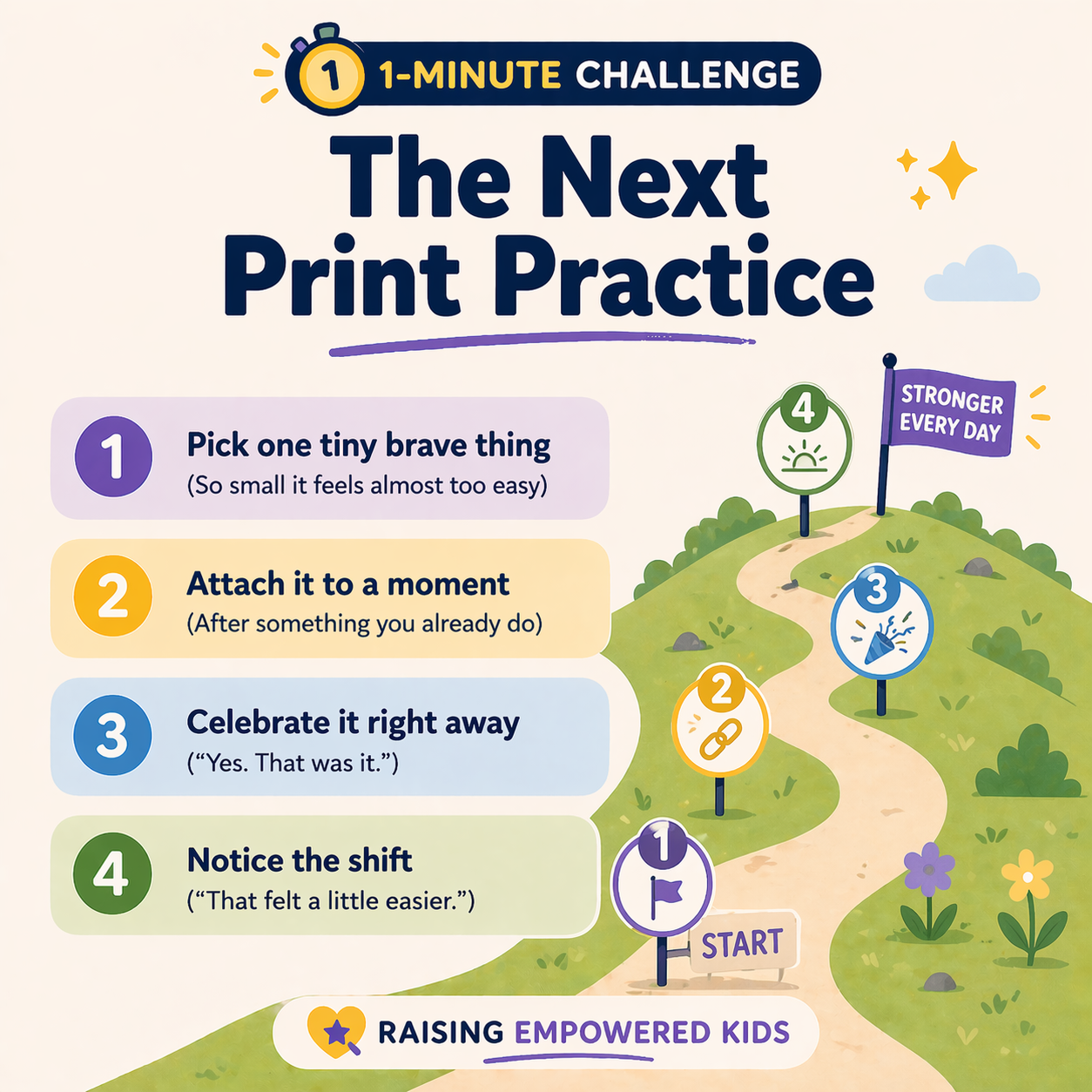
The Next Print Practice
Brave intentions don’t usually fail because of who we are. They fade because we wait too long between attempts.
When something feels hard, the brain doesn’t want a big push. It wants something small enough to succeed at and a quick feeling of “that worked.”
So this week, try a simple experiment with one brave action. Just one.
The motto that has run through this whole month — and the one we're leaving you with:
Progress is how I create motivation. Not the other way around.
You don't wait to feel motivated before you act. You act, and the motivation follows.
TOOL
The Voice That Decides
This month is about helping kids take the next step.
But right before they do, something else shows up first — a voice.
Our co-founder (and Hero Intelligence teacher) Tammy shares a simple way to understand it:
The Victim.
The Villain.
The Hero.
Same moment. Different voice. Different choice.
If your child gets stuck right before they act, this will help it click.
Watch it here:
Source: Dr Smiley Show Children's Book Author-a-Thon April 2026
Before you go…
One thing we’re seeing more of right now: kids hesitating to try unless they’re sure they’ll be good at it.
That’s why this month mattered.
Courage isn’t a big moment. It’s getting used to going before you feel ready.
If you want to show this in action, watch this video with your kids together:
Source: Boyd Varty, Life Guide & Author — Londolozi.com
It’s a simple idea: small actions can reshape much bigger systems. (Quick note: a few real hunting scenes.)
And that’s where we’re heading next.
In May, we move into Contribution Mindset — helping kids shift from “Can I do this?” to “Who does this help?”
Same small steps. Bigger impact.
See you next week!
Your friends at REK,
Adam & Matthew Toren, Sylvia Tam, and Tammy Vallieres

Our new member hub is live — free activities, conversation starters, and resources for your family. Access it here.
“The track will not wait for you. You must be still enough, patient enough, to see what is right in front of you — and then move.”