
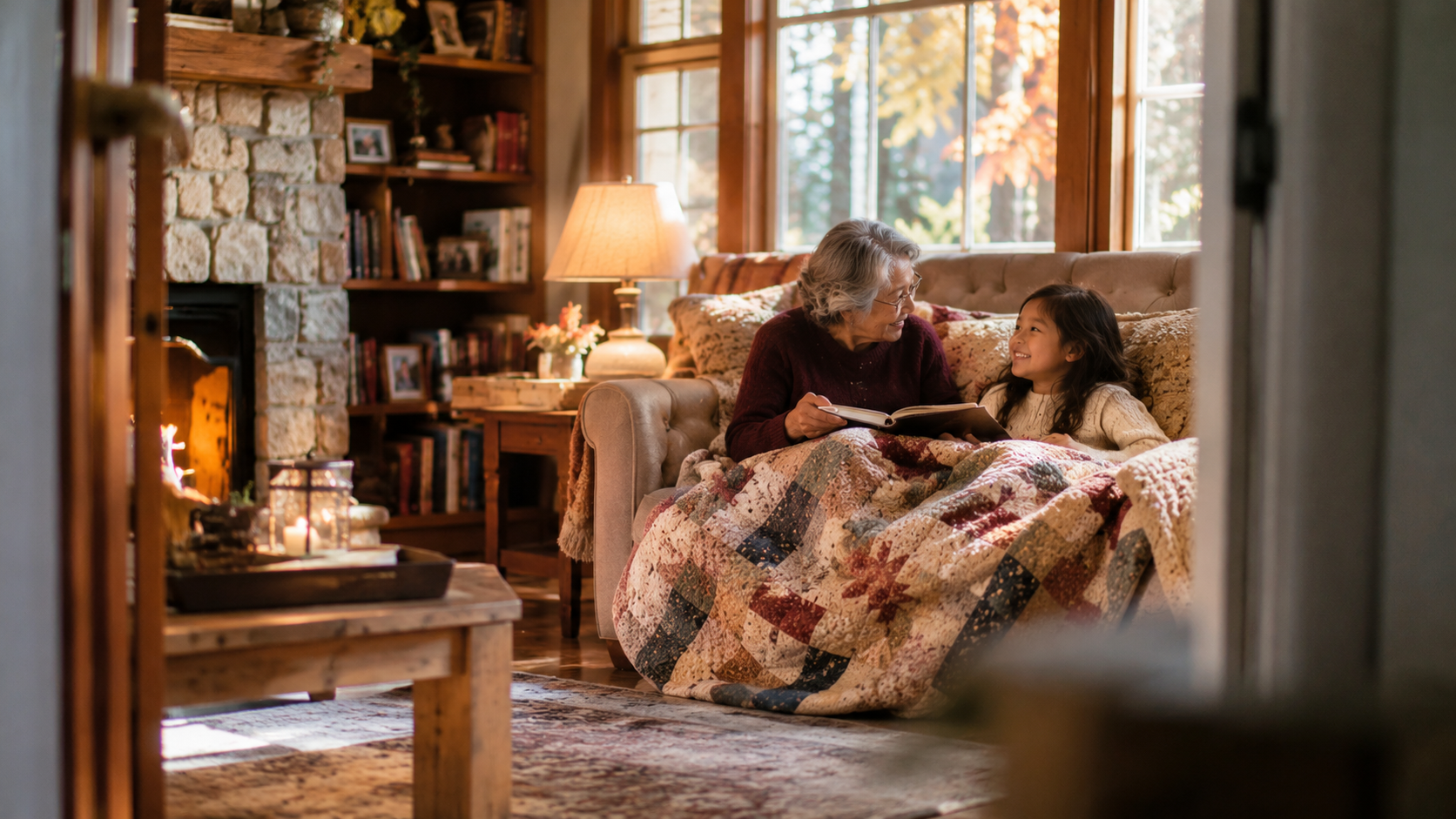
If you are in the United States, Thanksgiving is almost here. Soon a lot of us will be around a crowded table, with stories flying.
Do your kids know how you met? Where their grandparents grew up? A hard time your family made it through?
A psychologist named Sara Duke noticed that the kids she worked with who knew these stories seemed to handle challenges better. So her husband, Dr. Marshall Duke, and his colleague Dr. Robyn Fivush at Emory University turned her hunch into 20 simple questions.
In one of their studies, teens who knew more family stories had stronger self-worth and a clearer sense of who they were. That held true even after accounting for how well their families got along overall.
This week, we're making it with our hands.
HERO STORY
A Rooftop in Stitches
Have you ever dreamed you could fly?
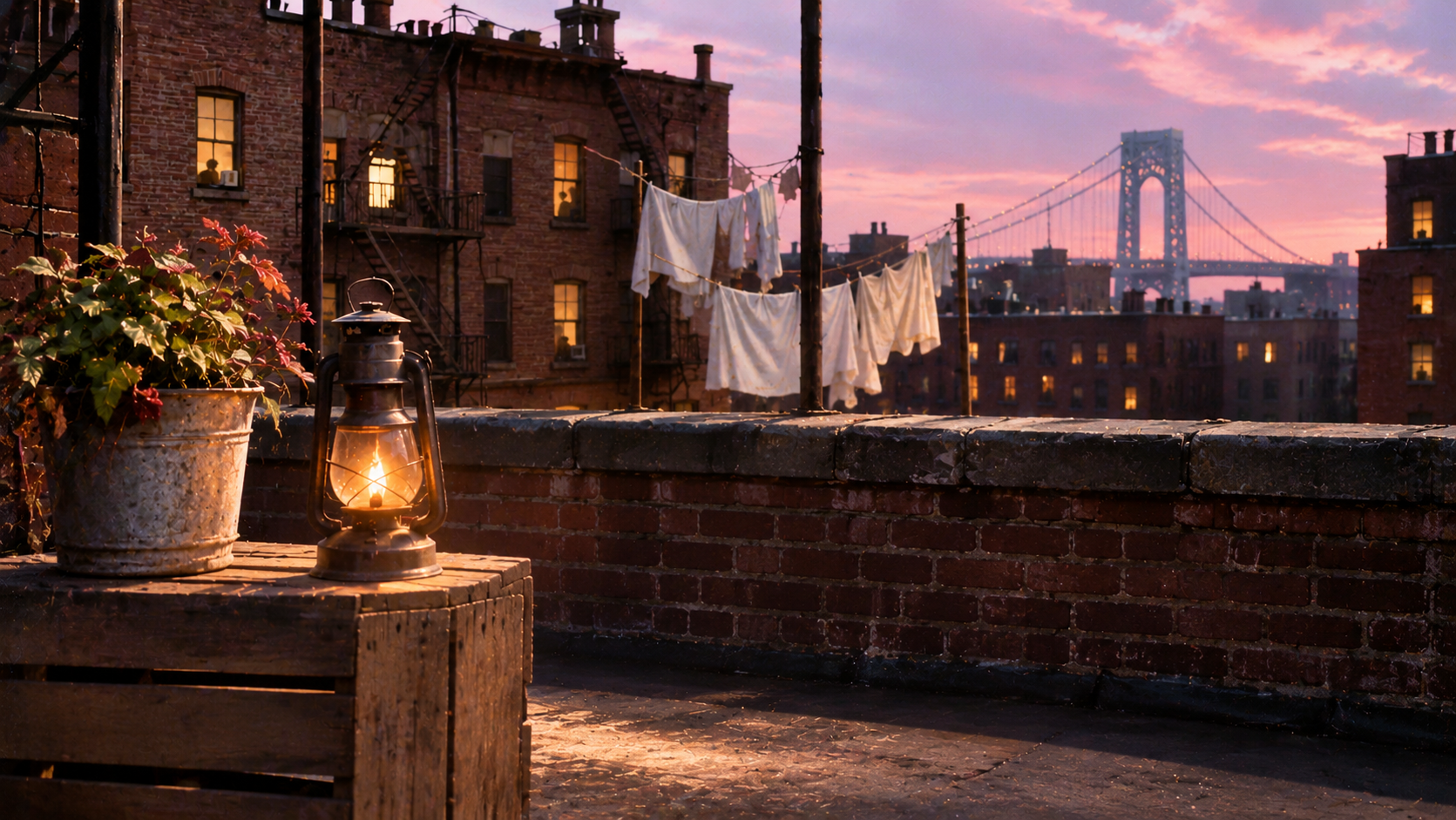
When Faith Ringgold was a young girl in the 1930s, she lived in Harlem, a neighborhood in New York City. On hot summer nights, families climbed up to the flat roofs of their apartment buildings to cool off. They called the rooftop "tar beach."
Faith grew up to become an artist. Her mother, Willi Posey, was a fashion designer who could sew almost anything.
So Faith tried something new. She and her mother started making quilts together. Faith painted pictures on the fabric and wrote words right onto it, so every quilt told a story.
In 1988, Faith made a quilt about those rooftop nights. In it, an eight-year-old girl named Cassie lies on tar beach and dreams she can fly, right over the giant George Washington Bridge.
A few years later, she turned that quilt into a picture book called Tar Beach. It won a Caldecott Honor, one of the biggest awards in children's books.
Quilting ran in Faith's family. Her great-grandmother made quilts, too, long before Faith was born.
Today, Faith's story quilts hang in museums, including the Smithsonian.
She didn't need a faraway adventure to make great art. She needed her own family's story, told with care.
Talk about it: What's one story from our family you'd put on a quilt?
THE TINY TRY
The Story Square
What will your family talk about at the table this year?
Often it's school, the game, and who wants more potatoes. The good stories are right there. Someone just has to ask.
Why it helps Dr. Duke has said the most helpful family stories include both the ups and the downs: the hard times and how the family stuck together. Hearing them shows kids that hard moments are survivable, and that they belong to something bigger.
Want to give it a try?
This week, you might ask one question at the table, maybe to a grandparent:
"What was hard when you were my age? How did you get through it?"
Then turn the answer into art.
For younger kids (5–9): Draw the story as one "quilt square" on a piece of paper.
For older kids (10–17): Add a caption, or record the story on your phone. Then tape everyone's squares together into one family paper quilt.
If the story wanders off course, or gets told twice, that's part of it.
Before you go…
Happy Thanksgiving from all of us at REK. We're grateful you're here.
It's also Native American Heritage Month. For a cozy read this week, author Kevin Noble Maillard (Seminole Nation) reads his award-winning picture book Fry Bread about a family gathered in the kitchen.
Friday is also StoryCorps' National Day of Listening. Their Great Thanksgiving Listen invites families to record a conversation with someone they love, using a free app.
👉 Join the Great Thanksgiving Listen
Next Sunday, we close out Meaning-Making month. What does gratitude have to do with purpose? More than you'd think.
Let’s ask the questions, draw the story, and keep it in our hearts.
Your friends at REK,
Adam & Matthew Toren, Sylvia Tam, and Tammy Vallieres

Our new member hub is live — free activities, conversation starters, and resources for your family. Access it here.
“The answers have to do with a child’s sense of being part of a larger family.”