
Why Kids Are Born to Help

Happy May the 4th Eve! May the force (aka patience) be with you tomorrow.
We'll come back to that in a second, but it turns out there's something in your child that works a lot like it. Invisible, built-in, and way more powerful than most of us realize. Something happens around 14 months.
A toddler is deep in play — blocks, maybe, or a toy that's been captivating them for the last twenty minutes. An adult nearby drops something. Hands full. Clearly struggling.
And the toddler stops. Toddles over. Picks it up and hands it back.
No reward. No prompt. No applause. Just a small person noticing that someone needed something and doing something about it.
This isn't a story from a parenting book. It's what developmental psychologist Felix Warneken documented across hundreds of infants, in study after study. The instinct to help isn't something children slowly learn. It's something they arrive with.
This month, we're exploring Contribution Mindset and we're starting where it actually begins.
Not with chores or gratitude journals or character lessons. But with something already living inside your child, waiting to be trusted.
STORY
Felix Warneken - Built In by Age 2
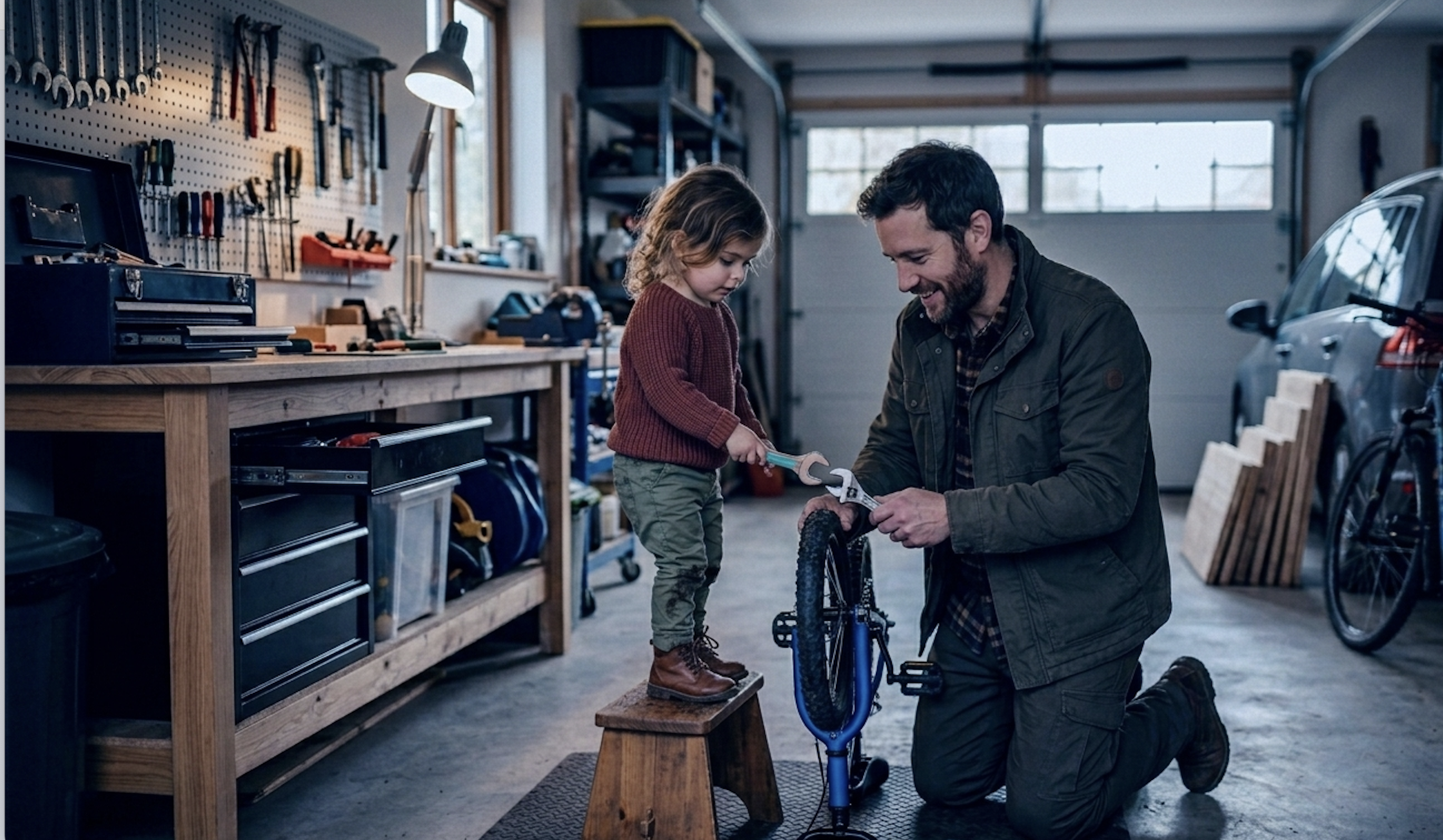
Felix Warneken didn't set out to change the way we think about altruism. He set out to understand when it begins.
Working in a developmental psychology lab, Warneken designed a simple experiment. An adult would struggle with a task like reaching for a dropped pen, unable to open a cabinet with full hands in front of infants between 14 and 18 months old.
The toddlers hadn't been coached. There was no treat waiting, no parent nodding encouragement from the corner. And yet, again and again, the children moved toward the struggling adult and helped.
What made the findings even more interesting was what happened when researchers introduced rewards. In some cases, children who received a material prize for helping became less likely to help again later.
The reward hadn’t strengthened the behavior. It had shifted it.
Psychologists call this the overjustification effect: when we add an external reason to do something someone was already inclined to do, we can sometimes weaken that original motivation.
The quiet turn: what these studies suggest isn’t that children need to learn to be generous. It's that they already are and that the way we respond can shape whether that instinct grows… or gets replaced.
The job of the parent, it turns out, isn't to install altruism. It's to protect it.
SKILL
The Silent Witness
Before you try a new skill this week, try something harder: doing less.
Want to try the Silent Witness challenge?
Most of us have been trained to respond to a child's helpful act with enthusiasm: "Good job! You're so kind!" It feels like the right thing. We want them to know we noticed, to feel good about what they did.
But there's another way to respond — one that keeps their inner motivation intact.
This week, when you see your child help spontaneously without being asked, try this instead:
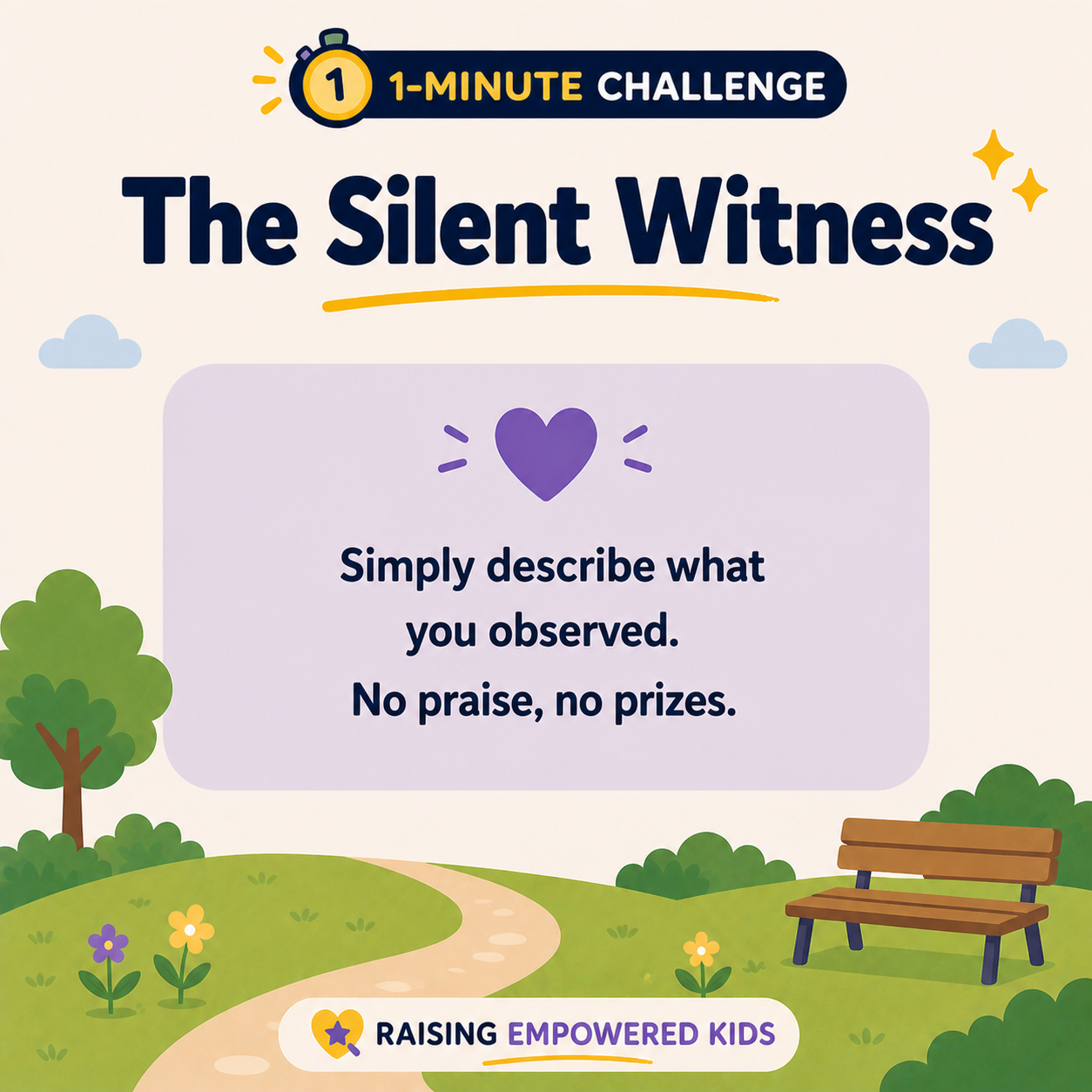
You're reflecting their action back to them, without evaluating it. You're saying: I see you. What you did mattered. No performance required.
You might also try asking: "How did that make your heart feel?" Not to generate a particular answer, but to help them tune into the internal signal that already knows.
Permission to be imperfect: you'll probably say "good job" at least once this week. That's okay. This is about noticing the pattern, not perfecting it.
TOOL
21 Experts. 16 Days. Zero Cost.
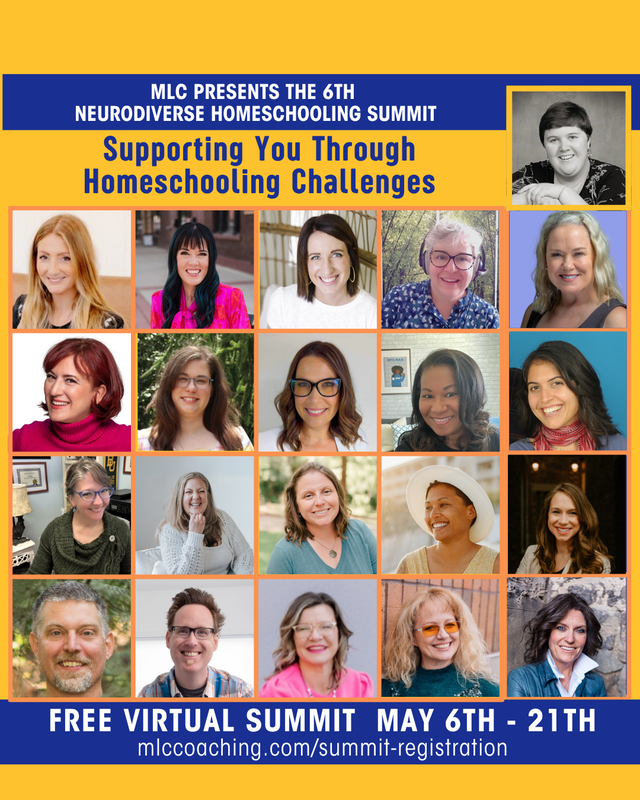
One expert a day — bite-sized, practical, and built for real life.
The 6th Neurodiverse Homeschooling Summit runs May 6–21, and it's designed for exactly the kind of parent you are. One who knows their child learns differently and refuses to settle for a system that wasn't built for them. Our own Tammy Vallieres is one of the voices inside.
Whether your child is neurodivergent or just your kind of different, this is the support you didn't know you were missing.
Before you go…
Your job this week is just to notice those small, unprompted moments when your child moves toward someone who needs help. And when you see it, let it breathe.
If you want to see what we mean, take four minutes and watch the footage from Felix Warneken’s lab. It’s one of those videos that quietly resets how you see kids.
Source: Felix Warneken, PhD — Harvard Department of Psychology
One more thing before we close — this Tuesday is Teacher Appreciation Day (May 6), and we'd be remiss not to mention it.
If you have a teacher in your life, or a child who does, this week is a good moment to say something specific. Not "thanks for everything you do," but something like what we practiced above: a quiet, concrete acknowledgment of what you actually saw.
"You noticed my kid was struggling and gave them a moment instead of moving on. That mattered."
That's the silent witness, applied outward. Teachers practice it every day, usually without anyone naming it. This week, maybe someone does.
Your friends at REK,
Adam & Matthew Toren, Sylvia Tam, and Tammy Vallieres

Our new member hub is live — free activities, conversation starters, and resources for your family. Access it here.
“Children are not born selfish. They are born helpers. What we do next — and what we don’t do — shapes what remains.”