
A Different Way to Help Anxious Kids

Here's something that might land differently than you expect:
The kids who struggle most with anxiety aren't always the ones who feel too much. They're often the ones who've learned to fight what they feel.
The suppression of feelings — "don't be upset," "you're overreacting," "just focus on the good stuff" — doesn't make emotions go away. It makes them louder. They get stored instead of processed. And they tend to come out sideways, at inconvenient moments, in ways that feel out of proportion.
This week, we're looking at courage through an emotional lens — through the work of Susan David, a Harvard Medical School psychologist who has spent twenty years studying how people relate to their inner lives.
Her central finding sounds simple, but it isn't easy: emotions aren't obstacles to brave action. They're data. They're telling us something. The trick, and the skill, is learning to read them instead of fighting them. And it turns out that kids who learn to do this don't just feel better. They act more bravely.
The story that brings this to life happened on a beach in Thailand in 2004. The person at the centre of it was ten years old.
STORY
When a Feeling Becomes Data
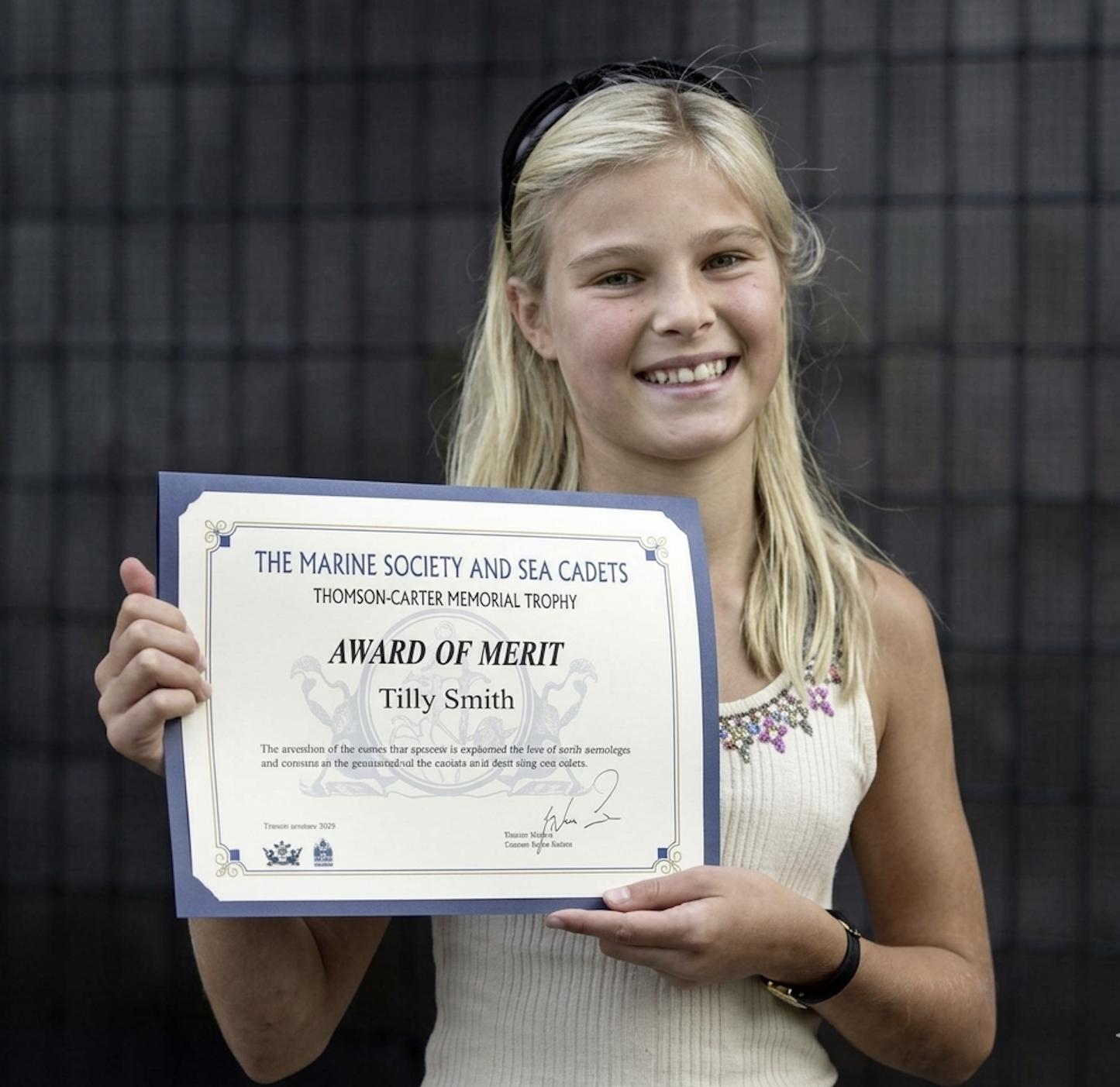
December 26, 2004. Maikhao Beach, Phuket, Thailand.
Tilly Smith was ten years old, on holiday with her parents and younger sister. She had never been to Thailand before. She didn't know the coastline, didn't know the tides, didn't know anyone on the crowded beach around them.
She did know one thing: two weeks earlier, back home in England, her geography teacher at Oxshott Primary School had spent a lesson explaining what a tsunami looks like before it arrives. Not the wave itself — that comes far too late. The warning signs. The way the water pulls back from the shore in an unusual, unsettling way. The strange bubbling or foaming on the surface. The sound, or the uncanny quiet.
That morning, standing on Maikhao Beach, Tilly noticed the water doing something odd.
She felt something rise in her — a physical alertness, an unease that pulled at her attention. Many adults on that beach felt it too. Something was off. The mood shifted slightly. But for the adults, the feeling had no information attached to it, so they looked, shrugged, and went back to their conversations.
Tilly did something different. She got curious about what she was feeling.
She told her mother: the water is behaving like my teacher described. Her mother paused and listened. Tilly used the word "tsunami." Her father didn't hesitate — he went immediately to the beach staff. They hesitated. He went louder, more urgent, moving toward the crowd, urging people to get off the beach and up to higher ground.
At first, people were annoyed. This was Boxing Day. The beach was full. Who was this man yelling at strangers?
They moved anyway.
Maikhao Beach was one of the very few places in Phuket where no one died that day. The beach was hit. But when it was, it was empty. Roughly a hundred people had moved to safety in the minutes before the wave arrived — because a ten-year-old girl did not dismiss what she was feeling.
She treated it as information. She followed it. She said it out loud.
The quiet turn: Tilly didn't feel less fear than the adults around her. She just did something different with it. She got curious about it instead of overriding it. Scroll down for a short video to share with your kids.
SKILL
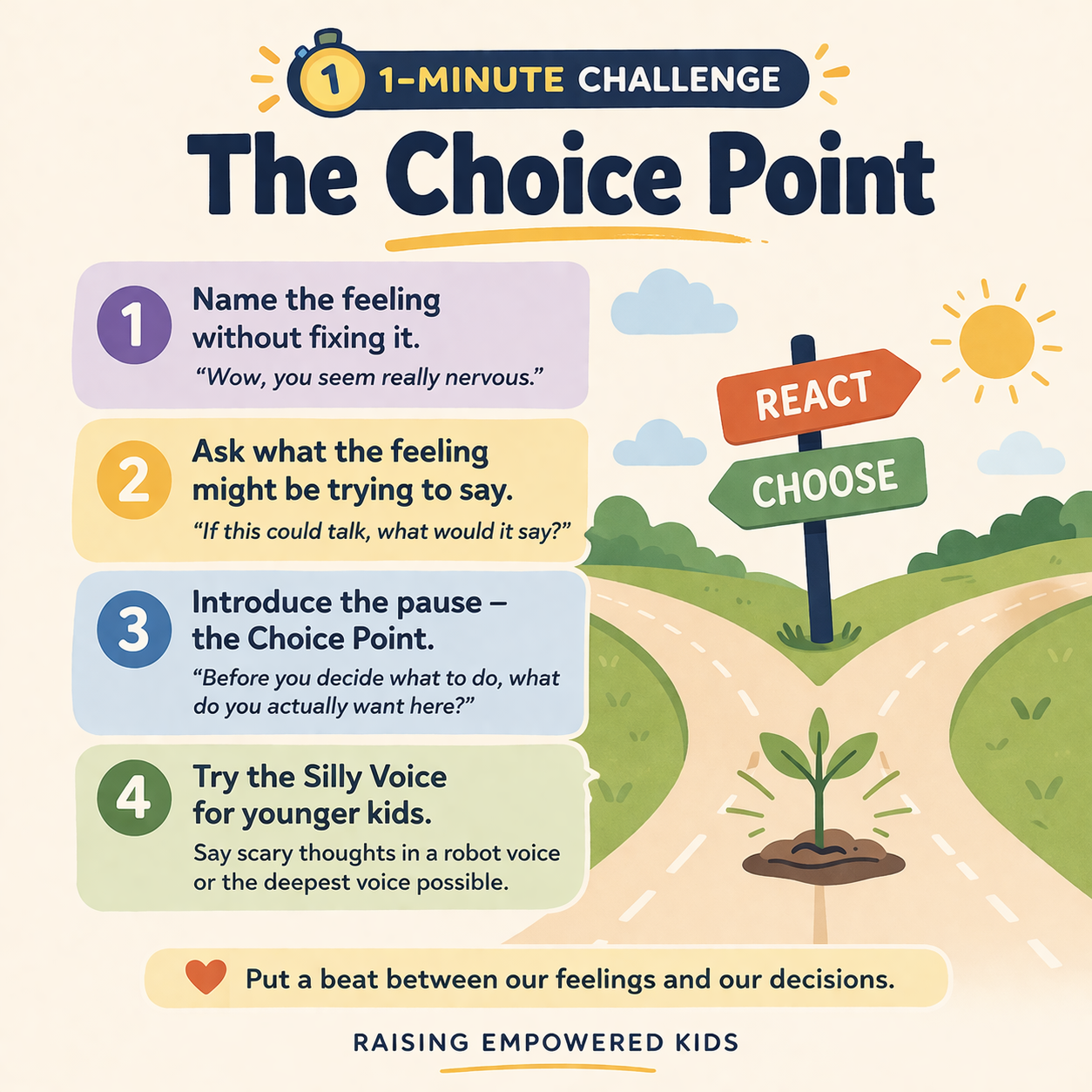
The Choice Point
Has your child ever done something in a moment of panic or frustration and said afterward, "I don't know why I did that"?
That's the automatic path. An emotion arrives, and the action follows immediately — no space in between. It's not a character flaw. It's just what happens when we haven't been taught there's a gap there, and that the gap is where we actually get to choose.
This week, try one simple practice: the Choice Point. The moment between feeling something and responding to it. Susan David's research suggests that even a small amount of awareness there changes everything.
1. Name the feeling without fixing it.
When your child is visibly upset, resist the urge to reassure right away. Just say what you see: "You seem really anxious about this." Naming it out loud without immediately moving to solve it Is the first act of getting curious about an emotion rather than fleeing from it.
2. Ask what the feeling might be trying to say.
"If this nervousness could talk, what do you think it would tell you?" This makes the emotion a messenger rather than a problem. Kids often surprise themselves with what comes out when you ask this way.
3. Introduce the pause — the Choice Point.
Before your child reacts, backs out of something, blows up, shuts down, try: "Before you decide what to do, what do you actually want here? Not what the feeling wants. What do you want?" This is the Choice Point. It won't always work. It gets easier with practice.
4. Try the Silly Voice for younger kids.
When your child is caught in "I can't do this, I'm going to fail, everyone will laugh at me" — have them say the thought out loud in a robot voice or the deepest, slowest voice they can manage. It sounds ridiculous. It works. The thought becomes a thought instead of a truth.
The goal here is not to stop your child from feeling afraid or upset. It's to help them see that the feeling is a visitor, not a permanent resident and definitely not the one making the decisions.
That gap between feeling and responding? That's where courage lives. It can be practiced in very ordinary moments — in the car, on a walk, at the end of a hard day.
TOOL
Know Your Numbers. Then Make the Brave Move.
As parents, we track everything — except ourselves.
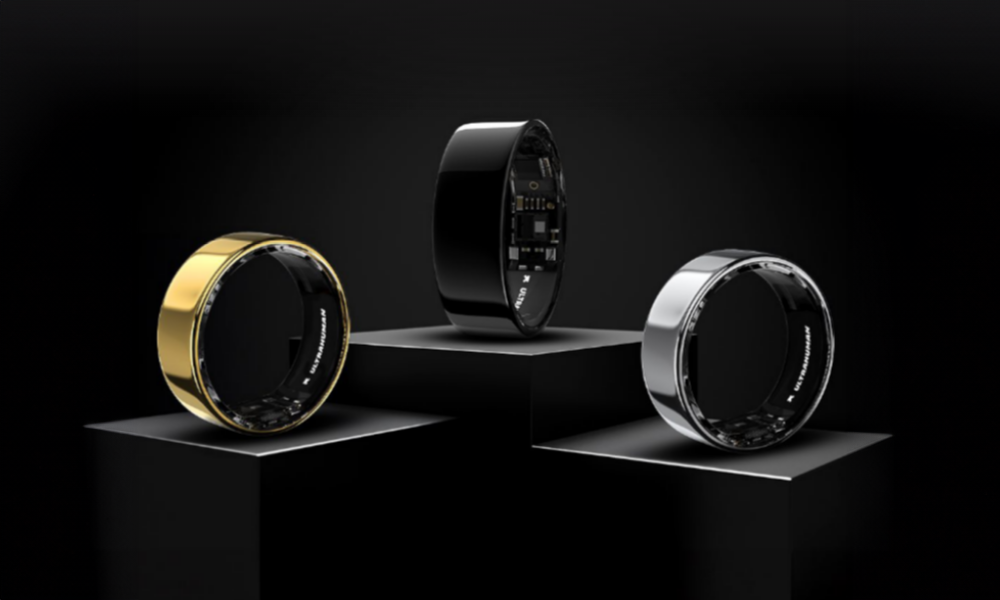
The Ultrahuman Ring sits quietly on your finger and tells you what's happening while you sleep so you wake up knowing exactly why you feel the way you do, and what to do about it. It also tracks your vitals, gives you personalized daily action prompts, and monitors the longevity markers that matter most for long-term health.
No screen. No notifications. No subscription fees. HSA/FSA eligible. On pre-order now — your future self will thank you.
Use code RAISINGEMPOWEREDKIDS for 10% off the Ultrahuman Ring Air or Ring PRO.
Using our link helps support REK.
Before you go…
Tilly Smith is thirty now. She still says she wasn’t extraordinary. She just recognized a pattern and trusted what she knew enough to speak up.
That’s something kids do every day when we take their thinking seriously. They notice more than we realize. Sometimes they just need the confidence that what they see matters.
If you’ve got a few minutes, this is a great one to watch together this week.
Source: United Nations Office for Disaster Risk Reduction
With Earth Day (April 22) coming up, it’s a nice excuse to practice paying attention to the world together like the sky, the ocean, the tiny details kids spot before we do. Curiosity counts more than we think.
Next week, we’re bringing in Maggie Dent to talk about the kids we secretly worry about the most… and why they might be doing better than we think. Her take tends to make parents exhale a little.
We’re just here trying to raise humans who trust what they notice and feel allowed to say something about it.
See you next week.
Your friends at REK,
Adam & Matthew Toren, Sylvia Tam, and Tammy Vallieres

Our new member hub is live — free activities, conversation starters, and resources for your family. Access it here.
“Discomfort is the price of admission to a meaningful life.”