
“Good job” might be backfiring

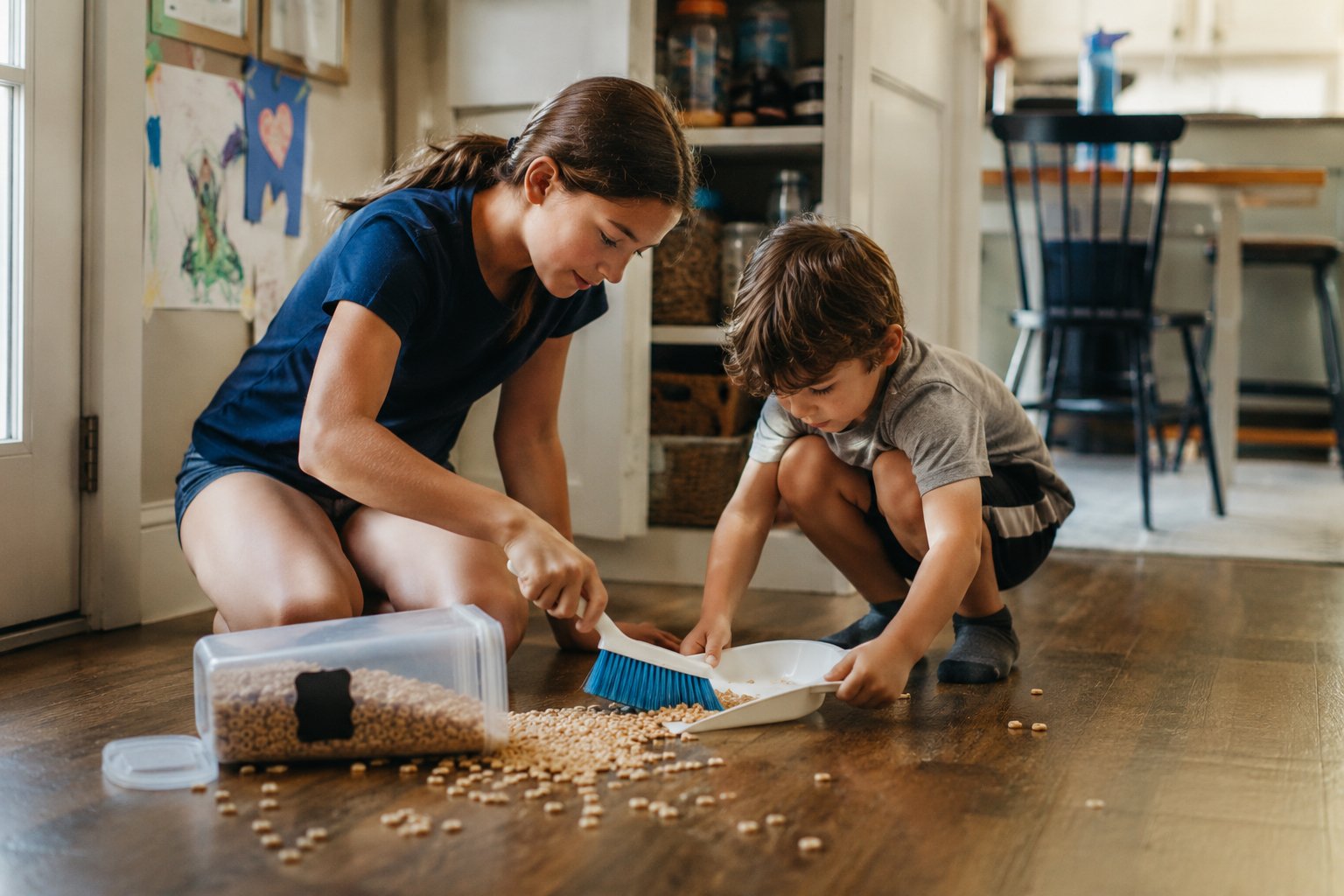
Most of us grew up hearing some version of this: "Be a good person."
And we pass it on. When our kids help, we tell them they're kind. When they share, we say they're generous. When they go out of their way for someone, we tell them what good people they are.
The intention is right. But the research, it turns out, is complicated.
Developmental psychologist David Yeager has spent years studying what actually builds moral character in kids and what gets in the way. What he found challenged something many parents take for granted: the idea that telling children they're good is the best way to raise good people.
This week, we look at what he discovered — and a small shift in how we talk to kids that can make a surprising difference.
STORY
The Project That Changed Everything
Collage by Valerie Chiang for Edutopia
Before David Yeager became a psychologist, he taught middle school students in Tulsa.
One year, after his class finished reading The Outsiders, he asked the students to create workshops for younger kids about conflict and how to treat people better.
What surprised him was how differently the students approached the assignment once they realized younger students would actually be learning from them. Kids who normally seemed checked out became more invested. They paid closer attention to the details. They wanted the workshops to be useful.
Years later, Yeager reflected on how important that shift was. The students weren’t just trying to finish schoolwork anymore. They felt like what they were doing mattered to someone else.
That experience became part of the research he later built his career around: young people are often more motivated when they feel capable of contributing, growing, and becoming useful to others, not when they feel pressure to prove they’re simply “good” or “bad” kids.
And maybe that changes how we talk to them.
Instead of focusing so much on labels like “kind,” “helpful,” or “good,” we can start noticing the small choices, efforts, and moments of growth underneath those actions.
Because helping isn’t something kids master all at once.
It’s something they practice.
SKILL
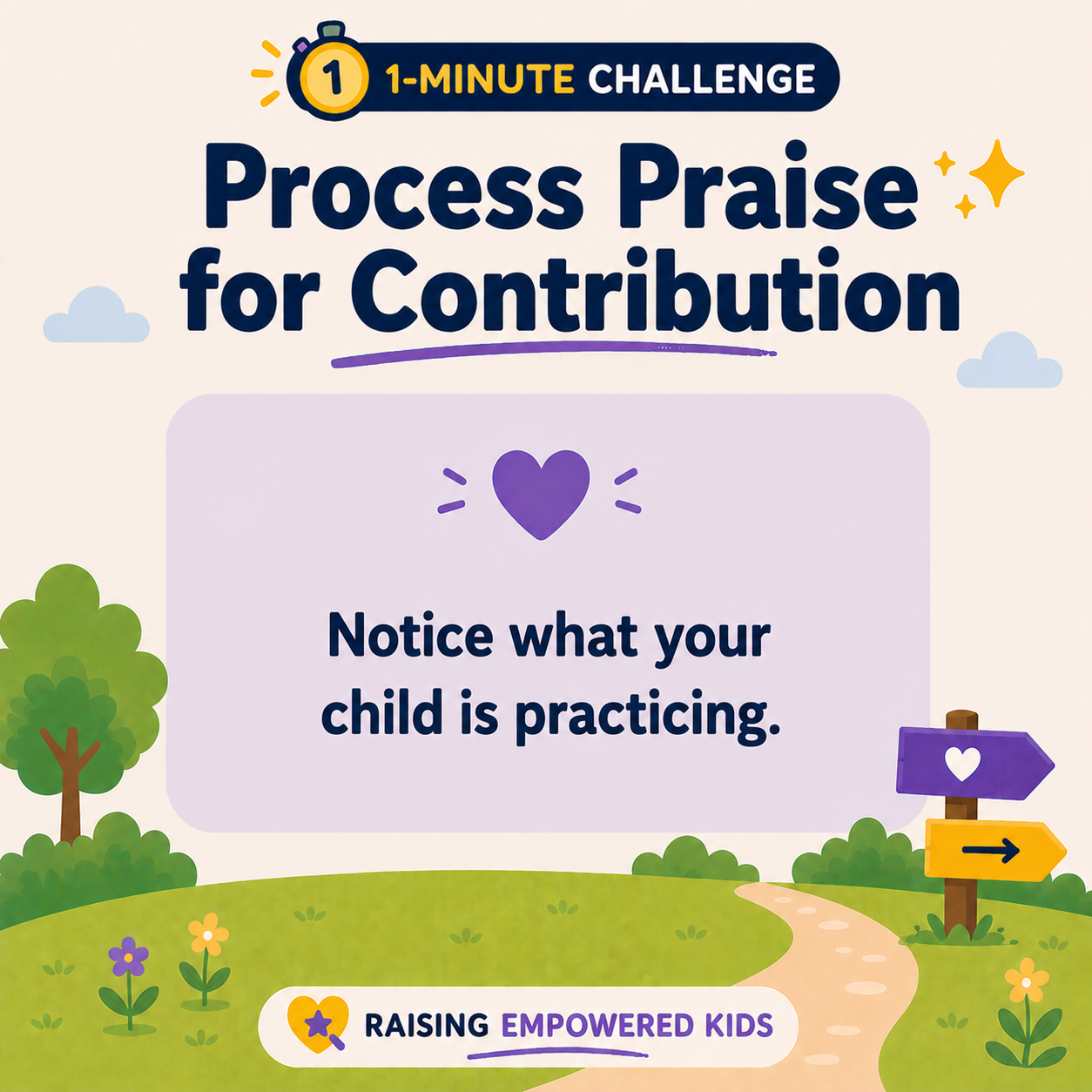
Process Praise for Contribution
One idea behind David Yeager’s work is that kids grow more when we notice their effort, choices, and awareness — not just label them as “good,” “smart,” or “responsible.”
So this week, try describing what your child actually did instead.
Examples:
“You kept working on that even when it got frustrating.”
“You noticed your friend was feeling left out.”
“You thought about that before spending your money.”
“You came over to help without being asked.”
“You found a different way to solve the problem.”
The more specific we are, the easier it is for kids to recognize the habits and choices they’re building over time.
TOOL
This Week’s Tiny Challenge

The next time your child wants to buy something, pause before answering.
Try asking:
“If this came out of your own spending bucket, would you still want it?”
Interesting conversations tend to follow.
Sometimes kids rethink it immediately.
Sometimes they decide it is worth it.
Both are part of learning.
That’s one reason some families use Greenlight. It gives kids a way to actually see money move between spending, saving, giving, and investing so everyday choices feel more real and connected.
Because responsibility usually doesn’t appear all at once.
It grows through lots of small decisions.
Before you go…
School’s almost out, which means a lot of parents are starting to think about how to keep kids motivated, engaged, and growing over the summer.
This 5 min TV interview with David Yeager on motivating young people felt especially fitting this week, especially as summer approaches:
Source: David Yeager, PhD — University of Texas at Austin, Department of Psychology
It’s also one reason we love the environment at Camp SuperNova. When kids are surrounded by supportive peers, confidence and leadership often grow naturally along the way.
Here’s to raising kids who keep trying, keep growing, and keep finding ways to help others along the way.
Your friends at REK,
Adam & Matthew Toren, Sylvia Tam, and Tammy Vallieres

Our new member hub is live — free activities, conversation starters, and resources for your family. Access it here.
“The goal isn’t to get kids to perform kindness. It’s to help them discover that they are the kind of person who keeps trying to grow.”