
The Wonder That Wouldn't Stop
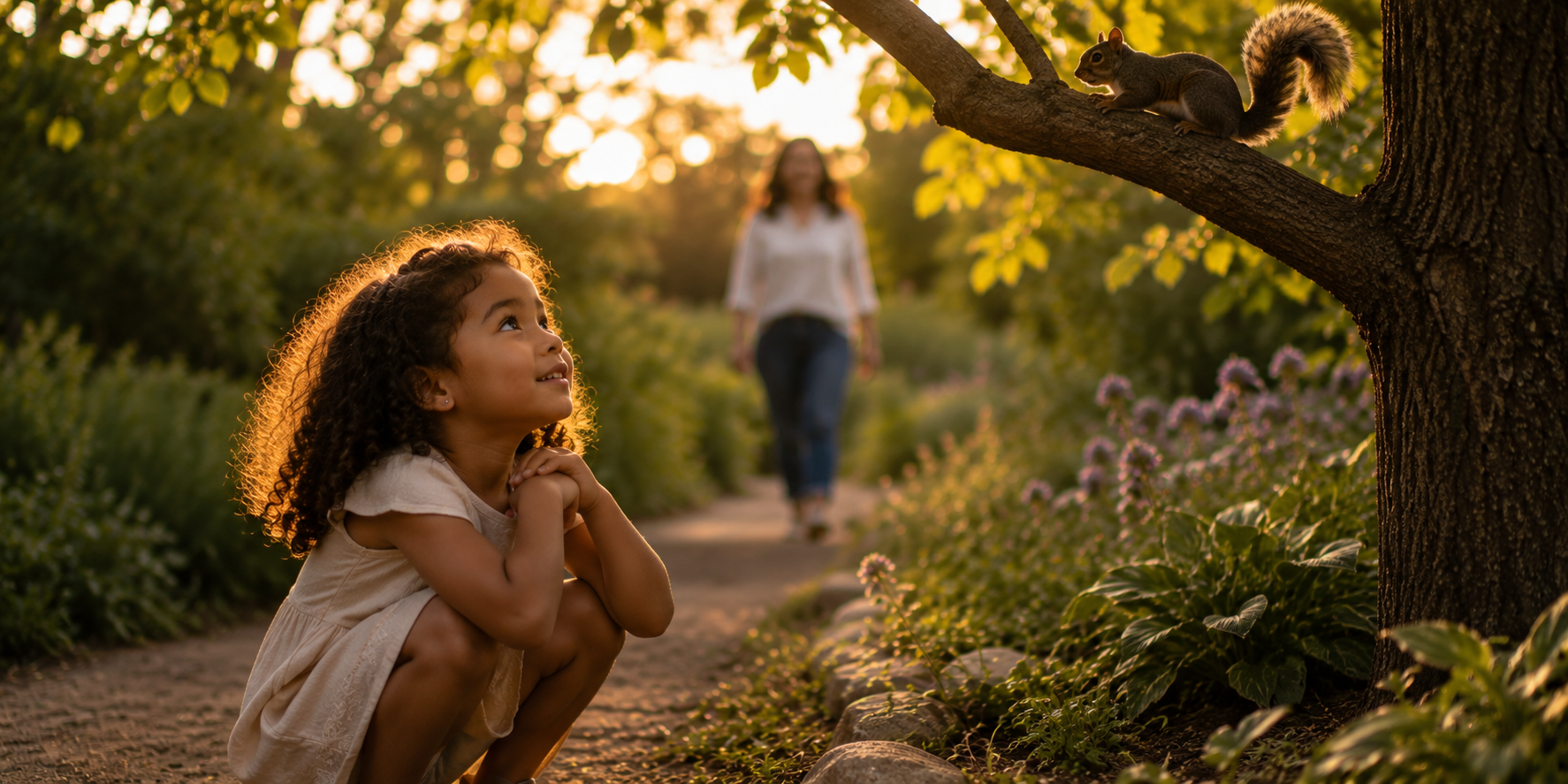
This is the last Sunday in June. Which means if you've got kids at home this week, you're probably somewhere between "summer is magical" and "we have completely run out of things to do."
Independence Day is Saturday. Alice in Wonderland Day is also Saturday, which feels exactly right, because this week's newsletter is about the kind of curiosity that follows a rabbit hole just to see where it goes.
We've been exploring Curiosity Drive: the inner engine that keeps children asking, experimenting, and reaching toward what they don't yet understand.
We close out the month with Eleanor Duckworth, a Harvard educator who spent decades studying how children learn. Her conclusion was simple and a little radical:
The goal isn't to give kids answers. It's to give them occasions to have their own wonderful ideas.
This week, a story about someone who had a very big wonderful idea, starting from a body that doctors said would never walk again.
STORY
SHE JUST KEPT WONDERING
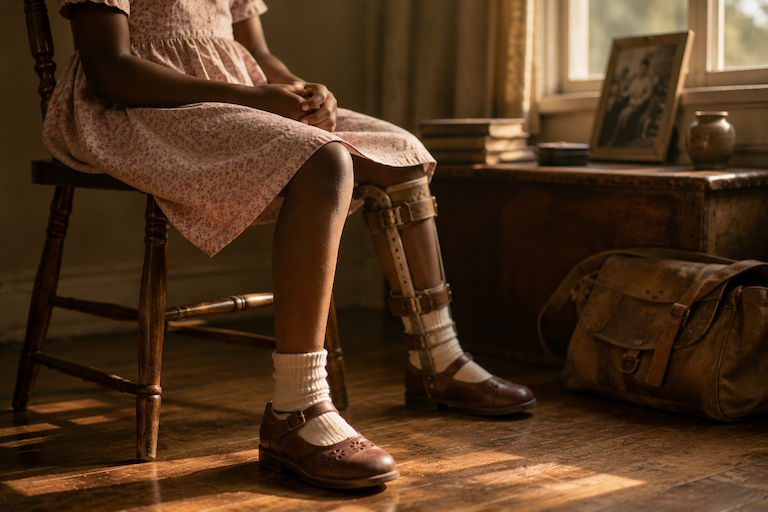
Wilma Rudolph was five years old when doctors told her she would never walk again.
She had already survived polio, scarlet fever, and double pneumonia. Her left leg was paralyzed. She wore a heavy metal brace. Twice a week, she and her mother rode a bus 50 miles to Nashville, to the only hospital in the segregated South that would treat them, for hours of painful therapy.
Most kids, somewhere in that long stretch of braces and bus rides and watching other children run outside, would have stopped imagining a different version of themselves.
Wilma didn't stop. She kept wondering.
She watched her siblings play and wondered what running would feel like. She did her exercises and wondered how far her legs might eventually carry her. At nine years old, she quietly removed her brace, walked into church under her own power, and sat down. No one had told her she could.
By 12, she walked without any support. By 16, she was at the Olympics. By 20, she was the fastest woman in the world, the first American woman to win three gold medals in a single Games.
Her doctors had the facts. Her mother had the belief. But Wilma had the question: I wonder what I'm actually capable of. She never stopped holding it.
That wondering is what kept her in the work when the work was hard. Not certainty. Not a plan. Just genuine curiosity about her own possibility.
SKILL
THE 17-SECOND RULE
When your child gets stuck, what's your first instinct?
A puzzle they can't crack, a skill that won't come, a moment of visible frustration. Most of us either step in to help or gently suggest moving on. Both are loving responses. But Eleanor Duckworth would say something important is happening in that stuck moment, and we might be interrupting it.
Here's what the research shows. When a child hits a gap between what they expected and what actually happened, their brain shifts into active search mode. The frustration is real, but it's also a signal: something interesting just occurred, and the brain wants to figure it out.
That shift takes about 17 seconds.
If we step in before the 17 seconds are up, we accidentally short-circuit the discovery. We hand over the answer before their brain had a chance to want it.
This week, try counting to 17 in your head the next time your child is stuck. That's it. Just wait.
You don't have to say anything. You don't have to look away. Just hold the space and let the wondering do its work.
You might be surprised what they find on the other side of 17 seconds.
And if nothing comes? That's fine. You can step in then with a gentle question: "What are you still wondering about this?" Sometimes the wondering is the whole point.
Good timing for this one: a long July 4th weekend, no schedule, and plenty of space for small experiments.
TOOL
Summer just got a whole lot more interesting.
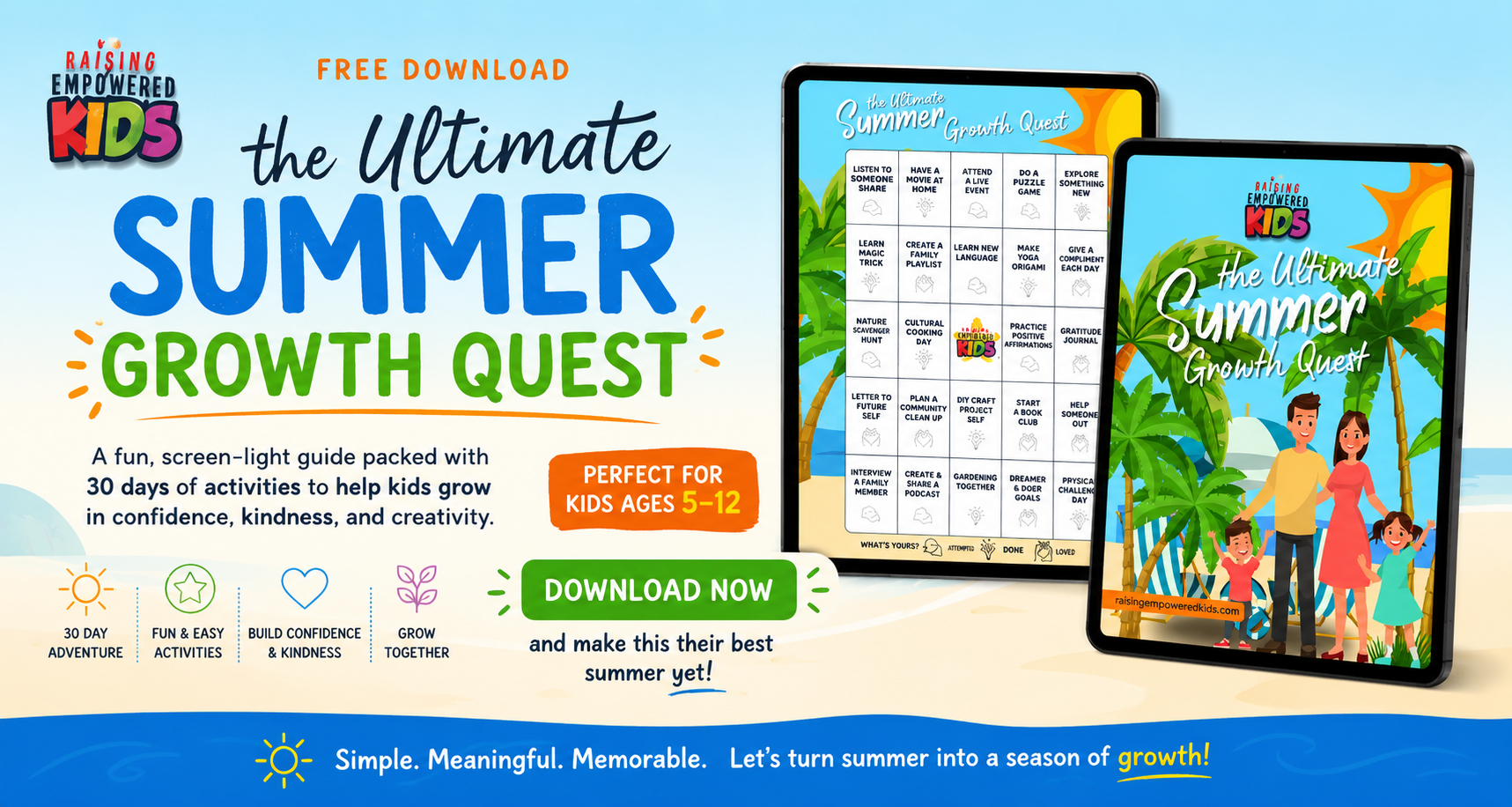
The Ultimate Summer Growth Quest is packed with activities that keep kids learning, connecting, and growing all summer long — no schedule required.
It's free. It's yours. And your kids are probably home right now.
Before you go…
That's a wrap on Curiosity Drive. We hope something here has sparked a new question in you, or in the kids you love.
A few things before we head into July:
Camp Supernova — Registration Open
Virtual summer camp runs July 13 to 17 for kids ages 6 to 12. A full week of Hero Intelligence activities, creative challenges, and community. Camper and mentor pairs are welcome.
👉 Register for Camp Supernova (save $50 off registration when you sign-up by 6/30)
The Hero Within — Award-Winning Short Film
"The Hero Within" won Best Short Film at the International Niagara Falls Film Festival. If you haven't seen it yet, this long weekend is a good time.
This Week's Resource
👉 Watch Wilma Rudolph’s Story from Polio to Podium
Next week, we begin July and a brand new capacity: Self-Trust. We can't wait to explore it with you.
Happy Fourth of July and Canada Day to everyone celebrating this week. We hope there are good fireworks, good food, and at least one kid who wanders off to follow something curious.
Your friends at REK,
Adam & Matthew Toren, Sylvia Tam, and Tammy Vallieres

Our new member hub is live — free activities, conversation starters, and resources for your family. Access it here.
“The having of wonderful ideas is what I consider the essence of intellectual development.”