
The Hidden Cost of Raising "Good" Kids
You know what gets praised more than almost anything else in parenting?
Raising a child who's "so good."
So polite. So helpful. So easy.
So... quietly running on empty.
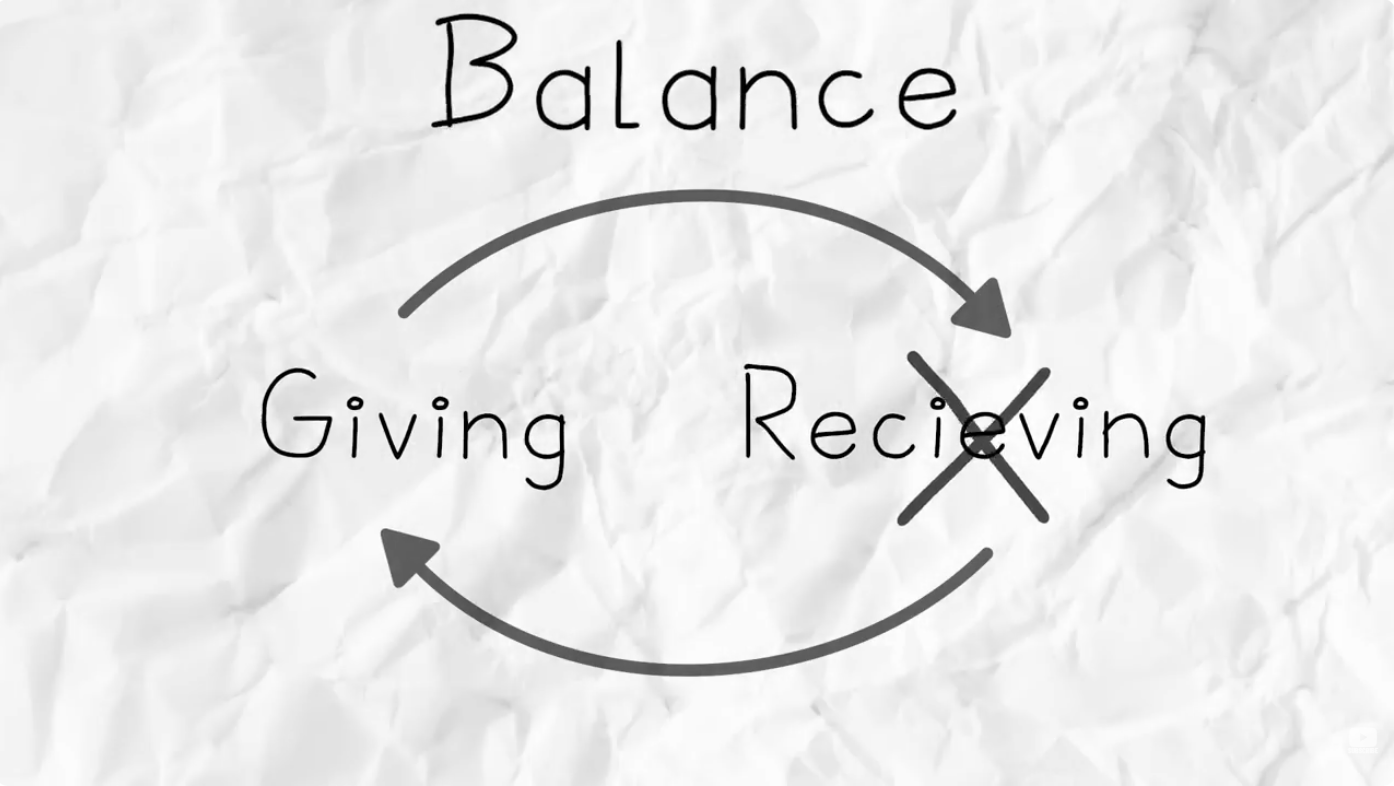
Marisa Peer, a British therapist who's spent decades studying self-worth, puts it like this: being too nice is like breathing out and never breathing in.
It feels generous at first.
Then it starts to hurt.
And eventually, there's nothing left.
Here's the thing about Belonging Intelligence that we don't talk about enough:
Sometimes kids aren't being "good" because they feel secure.
They're being "good" because somewhere along the way, they learned that love has conditions. That belonging means being easy. That taking up space might cost them their place.
Giving matters. Of course it does.
But so does breathing in.
Belonging isn't performing to stay safe.
It's knowing you can be real and still be loved.
This week's story is about someone who learned that lesson on the world's biggest stage.
The Girl Who Wasn't Supposed to Stay

Photo: Getty Images
Before Simone Biles became the most decorated gymnast in history, she was a little girl in foster care.
Her birth mother struggled with addiction. By the time Simone was three, she and her siblings were in the system, bouncing between placements.
Then her grandfather — Ron Biles — and his wife Nellie made a choice that changed everything. They adopted Simone and her younger sister when Simone was six.
Ron and Nellie didn't just take them in. They gave them something rare: a place where they could belong without proving they deserved it.
Simone found gymnastics around that same time. And for years, she carried everything — her team, the expectations, the weight of being the best gymnast most of us have ever seen.
She won. She showed up. She delivered.
And then Tokyo happened.
Mid-competition, on the world's biggest stage, Simone made a choice that confused a lot of people who think reliability looks like never saying no.
She stepped back.
Not because she gave up. Not because she didn't care.
Because her body and mind stopped talking to each other in a way that, for a gymnast, is dangerous. It's called the twisties — when you lose track of where you are in the air. And in a sport where you're flipping and twisting ten feet off the ground, losing that sense isn't just scary. It's not safe.
So Simone chose herself.
Some people called it brave. Others called it selfish.
But here's the part that matters:
Simone wasn't asking permission.
She wasn't auditioning for approval.
She reminded us that belonging doesn't mean breaking yourself to prove you deserve to stay.
Sometimes the bravest thing we teach our kids is that they don't have to earn love by disappearing.
A Small Practice for This Week
Ever notice how some of us are amazing at giving... and surprisingly terrible at receiving?
Which, if you think about it, is a wild strategy for staying whole.
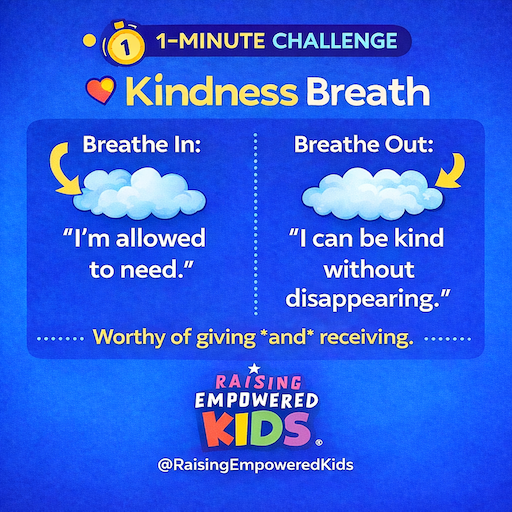
So here's a tiny experiment you could try — something we're calling the Kindness Breath.
It takes about 20 seconds.
Breathe in (hand on your chest if it helps):
"I'm allowed to need."
Breathe out:
"I can be kind without disappearing."
That's it.
You can try it once this week. You can try it with your child at bedtime. You can even say it out loud together:
"Quick kindness breath. In: we're allowed to need. Out: we can give without shrinking."
The goal isn't to stop being generous.
It's to remember the part we forget: we can give *and* still be worthy of receiving.
Not perfect. Just honest about needing air.
Clarity Over Pressure

One thing that quietly stresses a lot of teens? Not knowing where they actually stand.
That's where clarity helps.
Academic Approach has been helping families with exactly that for 25 years — turning uncertainty into clarity with their free SAT/ACT diagnostic. It gives students a real snapshot of where they are now and what it would take to reach their target score.
No pressure. Just honest data and a clear path forward.
And if your student needs support beyond the test, they tutor all academic subjects — online and in-person in Chicago.
Before you go...
Fun fact: In two days (February 17th), we step into the Year of the Fire Horse.
In Chinese tradition, the Horse represents freedom, energy, and forward momentum. But here's what's interesting about the Fire Horse specifically — it only comes around once every 60 years.
It's known for bold moves. Independence. A spirit that refuses to be contained.
The Horse doesn't ask permission to gallop.
So maybe this week, we practice not asking permission to need.
One slow breath in. One slow breath out.
If you want a little encouragement on this, Marisa Peer's short talk is worth a few minutes.
Source: Marisa Peer | The Painful Price of People Pleasing (YouTube)
Wishing you a week where you remember to breathe both ways — and a Year of the Horse filled with the courage to take up space.
Your friends at REK,
Adam & Matthew Toren, Sylvia Tam, and Tammy Vallieres

““Belonging is about taking pride, showing up, and offering your unique gifts to others. You can’t belong if you only take.””