
Teaching Kids That Helping Isn't Sacrifice

We spend a lot of time teaching kids how to compete.
Sports, grades, auditions, games — the early message is often some version of: there are winners and losers, and you want to be on the right side of that line. Which makes sense. Life has real competition in it, and we want our kids to be capable.
But Bill Damon, director of the Stanford Center on Adolescence for decades, noticed something in his research that pointed toward a different question.
The young people who were thriving, genuinely thriving, not just succeeding, weren't the ones who were best at winning. They were the ones who had found a way to make their presence a gift to the people around them.
This week, we're looking at contribution not as sacrifice, but as the thing that actually turns out to be good for your child too.
STORY
The Coach Who Measured More Than Winning
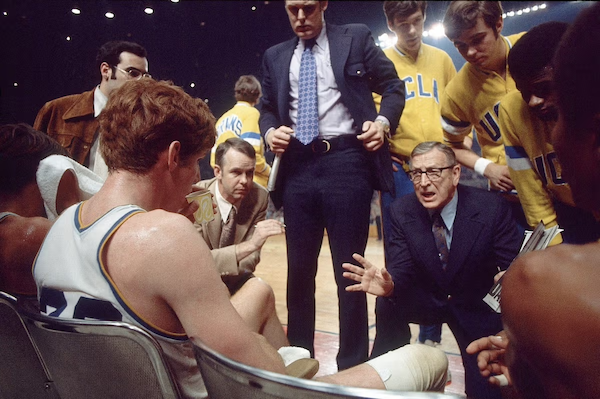
Rich Clarkson/Sports Illustrated via Getty Images
Before the 1973 NCAA championship game, coach John Wooden noticed something worrying about his UCLA players.
They were becoming consumed by pressure.
The team was expected to win again. The stakes were enormous. But instead of increasing intensity, Wooden focused on calming the emotional atmosphere around the team.
Former players often described how little Wooden obsessed over crushing opponents. What he cared about was whether players contributed to the strength of the group itself.
Did they support teammates?
Did they stay disciplined under pressure?
Did they make the people around them better?
Wooden understood something many kids quietly lose sight of in competitive environments:
Not every situation has to produce a winner and a loser emotionally.
Decades later, Psychologist Bill Damon called this a nonzero-sum mindset — the understanding that another person’s success, wellbeing, or growth does not automatically reduce your own.
In fact, Damon found almost the opposite.
The young people who thrived most over time weren’t simply high achievers. They were contributors. Kids who saw themselves as part of something larger than their own performance.
And strangely, contribution didn’t drain them emotionally. The kids who gave the most often seemed to have the most left.
SKILL
The Win-Win Detective
Think about a recent conflict in your family. Someone wanted something another person didn't want. What happened?
This week, try playing Win-Win Detective — a short family challenge that reframes how conflict gets solved.
The next time a genuine disagreement comes up, over screen time, who sits where, what to eat for dinner, pause and introduce a question:
"What would it look like if everyone's needs got met here?"
Not who wins or what's fair. What would it actually look like if nobody had to lose?
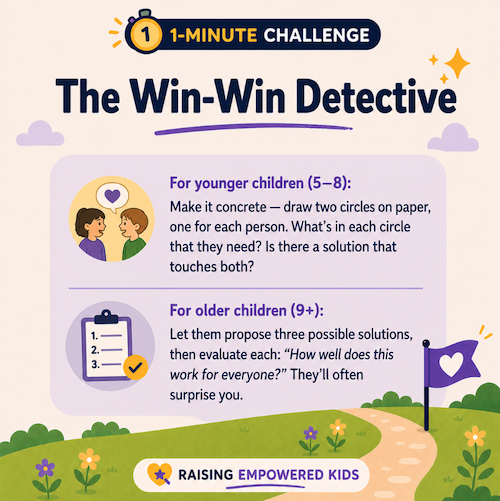
Let the kids lead the brainstorm. You're building a habit of mind. The practice of even asking the question shifts something. It interrupts the assumption that conflict is zero-sum.
You might try this once this week and see what your family comes up with. The goal isn't resolution. It's the conversation.
TOOL
Stories That Stay With Kids

Kidpreneurs at the Niagara Falls Film Festival 2024
One of the most powerful ways kids learn values isn’t through lectures. It’s through stories.
The kind that quietly stay with them long after the screen goes dark.
That’s part of why we’re excited that The Hero Within, our new REK short film about courage, identity, and the strength young people carry inside them, was officially selected for screening at the Niagara Canada International Film Festival!
Hosted by Landed for Success, the festival brings together filmmakers, creators, and storytellers from around the world in Niagara Falls to celebrate stories that move people forward.
If you’ll be near Niagara Falls, Canada June 6–7, we’d love for you to join us at the screening.
Before you go…
Quick challenge before you scroll away: how many of the “Six Cs” of healthy child development can you name?
If you guessed any one of Competence, Confidence, Connection, Character, and Caring…good job!
But the sixth added later might actually be the most important: Contribution.
The idea that thriving isn’t just about personal achievement, but about learning how your presence affects the people around you too.
And if you enjoy listening to wise coaches who sound like they’ve quietly figured out life decades before the rest of us, this short clip from legendary coach John Wooden is worth a watch this week:
Source: The difference between winning and succeeding | John Wooden | TED
As summer begins with all the races, camps, games, performances, and scoreboards that come with it, we hope your child learns something even bigger than how to compete well:
how to become someone who makes the people around them stronger too.
Your friends at REK,
Adam & Matthew Toren, Sylvia Tam, and Tammy Vallieres

Our new member hub is live — free activities, conversation starters, and resources for your family. Access it here.
“Belonging is about taking pride, showing up, and offering your unique gifts to others. You can’t belong if you only take.”