

Happy June, friends.
We're opening a brand new month with what might be the most fundamental Hero Intelligence of all: Curiosity Drive.
Not curiosity as a personality trait your kid either has or doesn't. Curiosity as a cognitive engine — one that can be fueled or stalled depending on what surrounds it every single day.
Developmental psychologist Susan Engel has spent decades studying what happens to children's curiosity as they grow.
What she's found is striking: kids who stay curious aren't just more engaged — they perform better academically, and for children in low-income families, strong curiosity can actually close the achievement gap with their higher-income peers. It works as a buffer, a rocket booster, a quiet form of resilience.
The engine is already running in your child. This month, we're learning how to keep it that way.
We have four remarkable thinkers guiding us through June — and we're starting this week with a story about a boy who never stopped asking why.
P.S. We have something pretty special to share at the end of this one. Worth reading all the way through.
STORY
THE BOY WHO ASKED TOO MANY QUESTIONS
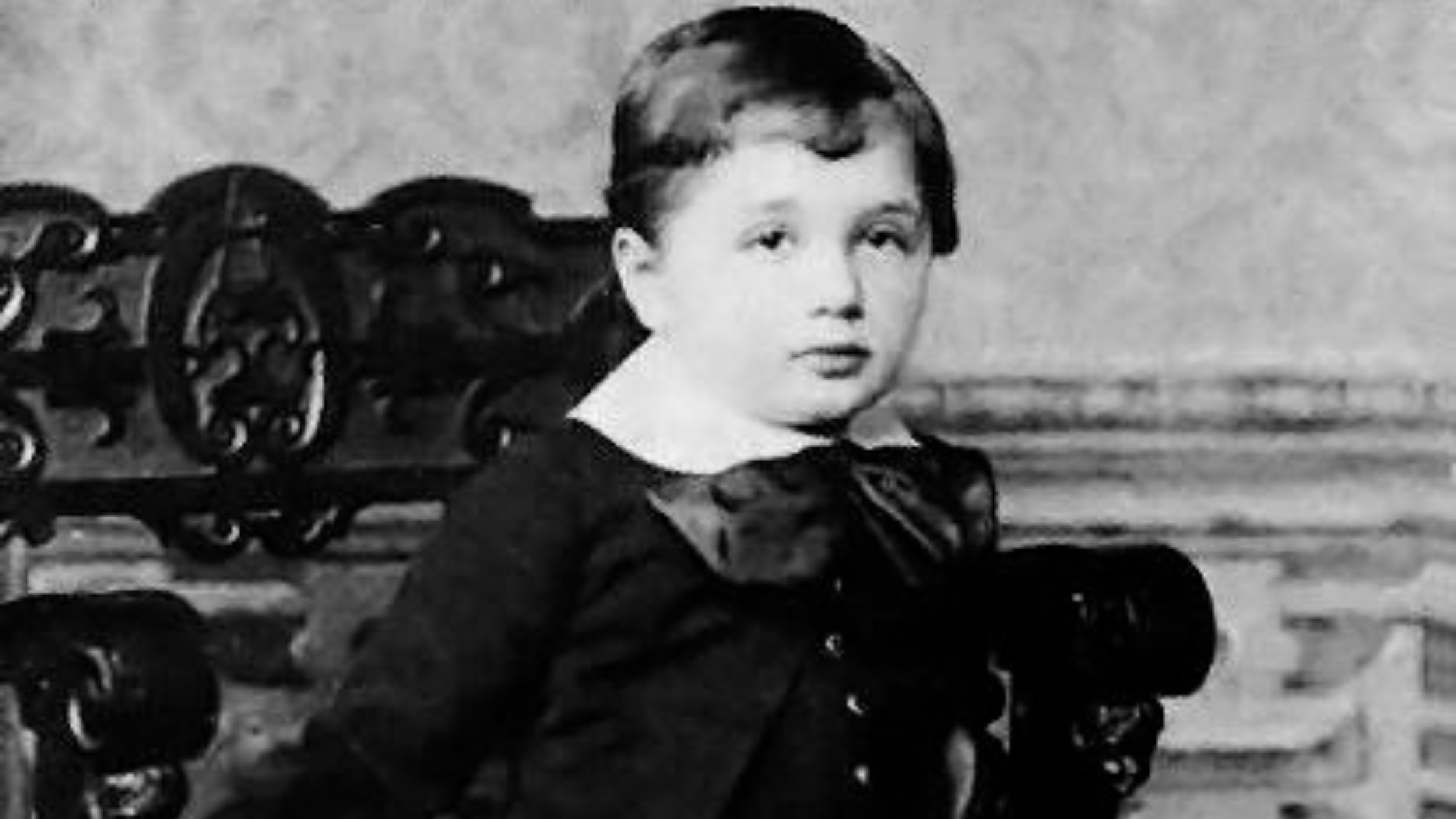
Source: The Hebrew University of Jerusalem
There's a story people love to tell about a young boy growing up in rural Germany in the late 1800s.
He was, by most accounts, a frustrating student. Slow to talk as a toddler. Prone to long silences. He asked so many questions that his teachers found him disruptive. One instructor allegedly told his parents he would "never amount to anything" because he refused to simply accept what he was told and move on.
He wanted to know why. Always why.
At age ten, a family friend gave him a compass. The needle, no matter which way he turned it, always swung back to point north. He sat with that compass for days. He couldn't let it go. There was something invisible doing that. Some force he couldn't see, couldn't touch, but could watch at work. The mystery kept him up at night.
He later said it was that compass that first ignited what he called a sense of wonder — a feeling he spent the rest of his life chasing.
That boy was Albert Einstein.
Einstein didn't become one of history's greatest scientific minds because he was the most obedient student or the fastest learner. He became who he was because he never stopped treating the world as a puzzle worth solving. He protected his curiosity. He followed it even when it led him somewhere strange.
The quiet turn in Einstein's story isn't the theory of relativity. It's the compass. It's the ten-year-old who looked at something ordinary and decided it was interesting enough to sit with.
That's Curiosity Drive. And your child has it too.
SKILL
THE "I WONDER" PIVOT
When's the last time your kid asked you something unexpected and you actually stopped to sit in it together?
Life is full, and "not right now" adds up faster than we realize. Most of us don't mean to wave questions away. It just happens.
Susan Engel's research found that kids who feel their questions are worth keeping stay more curious over time. The act of honoring a question — even without answering it — signals to a child's brain that wondering is valuable. The dopaminergic reward system, the same circuit that makes discovery feel good, activates on the anticipation of exploring something new. You don't have to answer the question to fuel the engine. You just have to honor it.
There's a simple practice called the "I Wonder" Pivot.
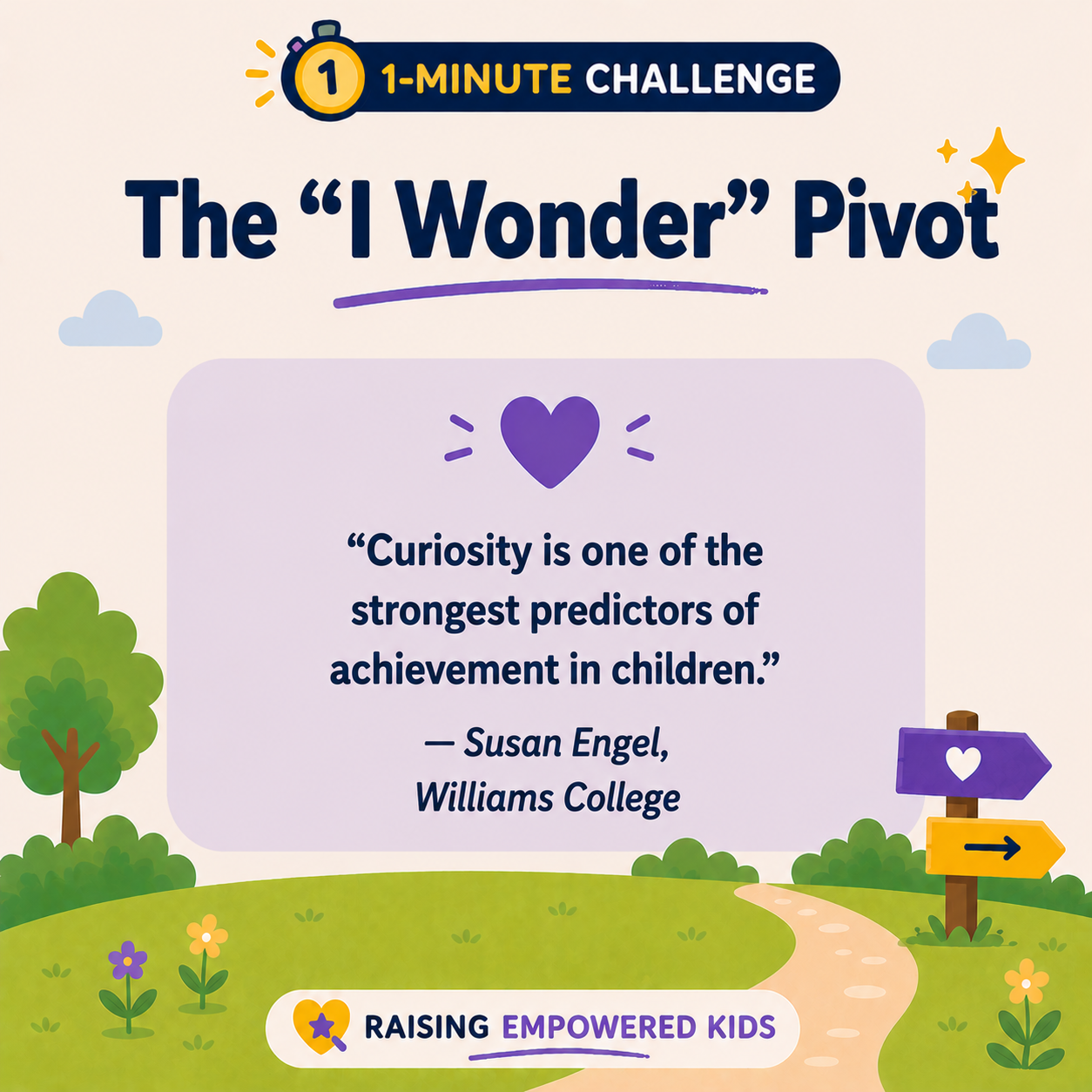
When your child asks something unexpected, surprising, or inconveniently timed, try this instead of answering or redirecting:
"That is such a good wonder. Let's write it down so we don't lose it."
That's it.
You might try keeping a small notebook on the kitchen counter this week. A sticky note pad on the fridge. Even a running voice memo on your phone. When a question lands, capture it. Come back to one together over the weekend.
The questions will surprise you. And so will your kid.
TOOL
The Confidence Behind the Spotlight

Connecting with talented young performers at the NIFF hosted by Landed for Success.
On Friday, Tammy and Sylvia attended the VIP Night at the Niagara Falls International Film Festival, where they had the opportunity to meet filmmakers, business leaders, artists, and community changemakers.
Yet the people who left the biggest impression were the kids.
Among them were talented singers, dancers, and young entertainers, including one who performed and was recognized with the Rising Star Award.
While their talents were remarkable, what stood out most was their confidence. These young people answered questions thoughtfully, shared their dreams with enthusiasm, and carried themselves with a quiet belief in who they are.
As they met with the parents and supporters behind these young stars, they were reminded that children build confidence by doing confident things.
And the good news? Those opportunities don't have to start on a stage. Every chance to create, contribute, volunteer, perform, lead, or simply follow a spark of curiosity helps children strengthen their Hero Voice and discover what they're capable of.
Before you go…
One of the best parts of raising kids is realizing how much we still don’t know about what’s happening inside their minds.
Sometimes all it takes is one good question to get a glimpse.
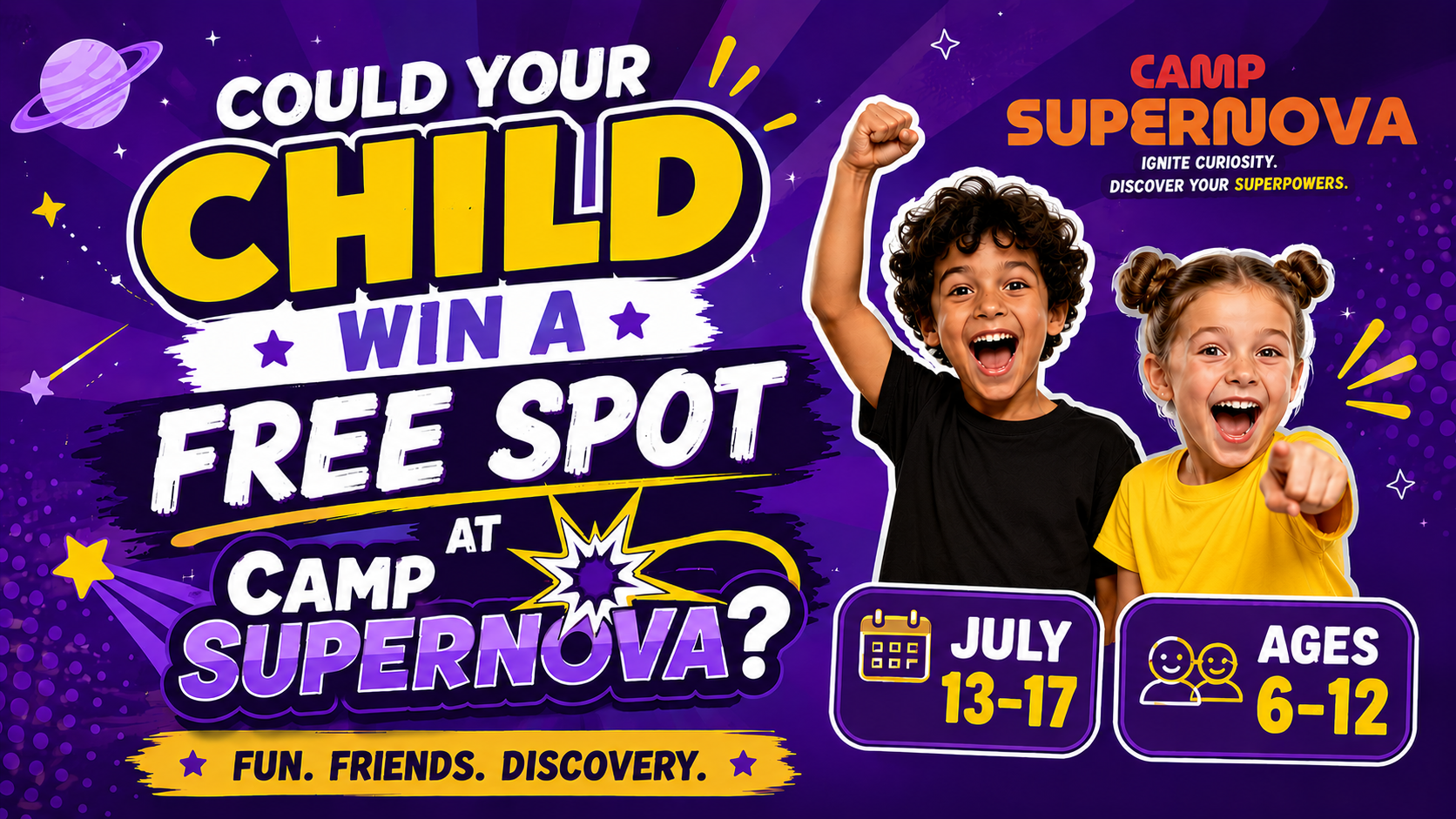
That’s why Kidpreneurs is launching The Big Idea Challenge for Camp Supernova — this summer’s coolest virtual camp for curious, creative kids ages 6–12, running July 13–17.
One child will receive a free scholarship! (valued at $349)
To enter, your child records a short video answering: “If you could create something to make the world better, what would you create?”
Open the link, record, and let your child answer in their own words.
You might be surprised by what they say. That’s the fun part.
👉 Submit Your Child's Entry Here
Entries close June 17.
If you have a cool story about curiosity, let us know - we'd love to share it.
Until next time, have an awesome week ahead!
Your friends at REK,
Adam & Matthew Toren, Sylvia Tam, and Tammy Vallieres

Our new member hub is live — free activities, conversation starters, and resources for your family. Access it here.
“Children are born curious. Our job isn’t to install curiosity — it’s to make sure we don’t accidentally uninstall it.”